The Colored Industrial Association Fair, Raleigh, 1879: Charles Norfleet Hunter’s Showcase for Black Progress
In November 1879, Black North Carolinians gathered in Raleigh for a fair they had organized themselves. What it displayed, and what it could not change, says a great deal about the post-Reconstruction South.
- When
- 1879
- Where
- Raleigh, Wake County, North Carolina
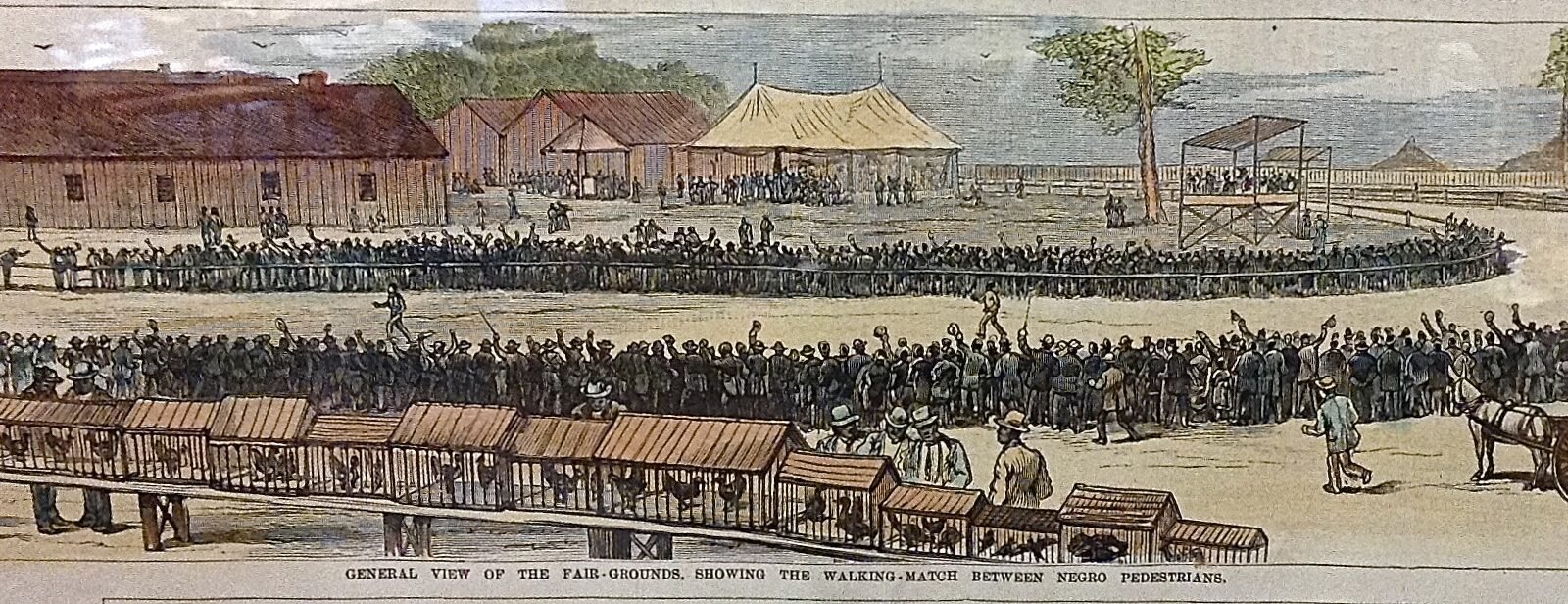
In late November 1879, visitors walked among displays of farm produce, handwork and machinery in Raleigh, the state capital. According to NCpedia, the first fair was held in the barracks buildings and grounds of Camp Russell, east of Raleigh, though a UNC history blog describes the site as a former military hospital. The event was called a colored fair, and it was run by Black North Carolinians who had planned it themselves.
The fair was the brainchild of Charles Norfleet Hunter, a Raleigh-born journalist and educator who was still in his twenties. State records give November 18, 1879 as the opening day, though a contemporary illustrated report gives November 17 to 20. Its existence shows what Black organizers could build in the late 1870s, and the boundaries they still had to work within.
A Raleigh childhood in a changing city
Charles Norfleet Hunter was born into slavery in Raleigh around 1852, before emancipation. Sources give birth years ranging from 1851 to 1854. He grew up during Reconstruction, when freedpeople in the city formed churches, schools and mutual aid societies, and when Black men voted and held local office.
That period was ending by the time Hunter reached adulthood. Democrats had regained control of North Carolina's state government by 1876, and the party's leaders promised a return to what they called white government. Hunter trained as a teacher and turned to writing and newspaper work, learning how to reach a readership that included both Black and white Raleigh residents.
Hunter's career suggests a man who believed education, publishing and visible achievement could make a case for Black citizenship even as political rights were shrinking.
Why organize a fair
Agricultural and industrial fairs were a familiar institution in the 19th-century South. The Colored Industrial Association's fair was modeled on the State Agricultural Society's state fair, which had been held since the 1850s, and it used the same kinds of displays, contests and parades.
Hunter and the North Carolina Industrial Association used the same format to showcase Black achievement. The exhibits, which ranged from handicrafts and produce to wagons, plows and machinery, were meant to show that Black farmers, mechanics and housewives could produce goods of quality. The fair also gave the association a way to bring people together across the state.
The site mattered too. According to NCpedia, the association secured permission from federal officials to hold the first fair in the barracks buildings and grounds of Camp Russell, east of Raleigh. A place once used by federal troops was thus put to use by a Black organization for its own purposes.
Crowds, officials and the limits of the moment
Governor Thomas J. Jarvis gave the opening address at the 1879 fair, and the displays were seen by people who held political and economic power over the exhibitors. Their presence meant the event was judged by people who could shape its future.
The arrangement had costs. According to a UNC history blog, Hunter stressed to reporters the importance of support from prominent white people in bringing the fair about. Black ambition was on display, but it was displayed inside a system that could withdraw its tolerance at any time.
A UNC history blog says thousands of African Americans attended the 1879 fair. Reliable totals for crowds and receipts were not found in the sources available for this article, so this piece does not offer figures.
What followed
The fair was not a single event. It ran annually until its final run in 1930, and Hunter remained its guiding force until it ceased. Hunter lived in Raleigh until his death in 1931 and stayed a central figure in Black civic and educational life there.
The limits tightened over the following decades. In 1898 white supremacist violence overthrew the elected biracial government of Wilmington, and in 1900 North Carolina voters approved a constitutional amendment that imposed literacy tests and a grandfather clause, which largely removed Black men from voter rolls.
Read against that history, the 1879 fair is not simply a story of triumph or failure. It shows a community using the tools available to it, including the press, public exhibition and institution building, to argue for its place in the state's future.
Citation information
- Article title
- The Colored Industrial Association Fair, Raleigh, 1879: Charles Norfleet Hunter’s Showcase for Black Progress
- Author
- admin
- Website name
- North Carolina Backstory
- URL
- https://northcarolinabackstory.com/the-colored-industrial-association-fair-raleigh-1879-charles-norfleet-hunters-showcase-for-black-progress/
- Original published date
- November 13, 2026
We strive for accuracy and fairness. If you see something that doesn’t look right, contact us.