Flight 932: The Marshall Team’s Last Trip Home From a North Carolina Game
In November 1970, a chartered jet carrying Marshall's football team home from Greenville, North Carolina, crashed short of the Huntington runway. All 75 aboard died.
- When
- 1970
- Where
- Near Huntington (Tri-State Airport, Ceredo/Kenova), Wayne County, West Virginia (departed Kinston, Lenoir County, North Carolina)
On the night of November 14, 1970, a chartered DC-9 sat on a runway in Kinston, North Carolina, taking on fuel for the last leg of a trip home. Aboard were the players, coaches and supporters of Marshall University's football team, who had just lost a road game in Greenville. Within the hour, the plane was flying through fog toward Huntington, West Virginia, and it would never land there.
The crash killed all 75 people on board. It wiped out most of Marshall's football team and left a deep mark on the university and the city of Huntington for years. It also has a North Carolina thread, because the trip home began after a football game in Greenville, in the eastern part of the state.
A road game in Greenville
Marshall played East Carolina University at Ficklen Stadium in Greenville on Saturday, November 14, 1970. East Carolina won the game 17 to 14. Marshall, coached by Rick Tolley, had traveled to eastern North Carolina for the game, and the team and its traveling supporters flew home that same night on a charter arranged for the trip.
The charter was a Southern Airways McDonnell Douglas DC-9, hired for the trip home. Southern Airways operated charter flights as well as scheduled service. The plane was flown in from Atlanta to Kinston, North Carolina, where it was refueled. The team traveled from Greenville to Kinston to board it, and the last leg was Kinston to Huntington.
Kinston was the departure point, not an intermediate stop. The plane was refueled at Stallings Field, and the passengers, many of them members of the Marshall travel party, boarded for the trip home. The flight left Kinston at 6:38 p.m.
The approach to Huntington
The flight reached the Huntington area late in the evening. Fog and low clouds lay over the valley, and the approach to the runway at Tri-State Airport was a non-precision instrument approach, which meant the crew had to descend to a set minimum altitude and then find the runway visually before they could land.
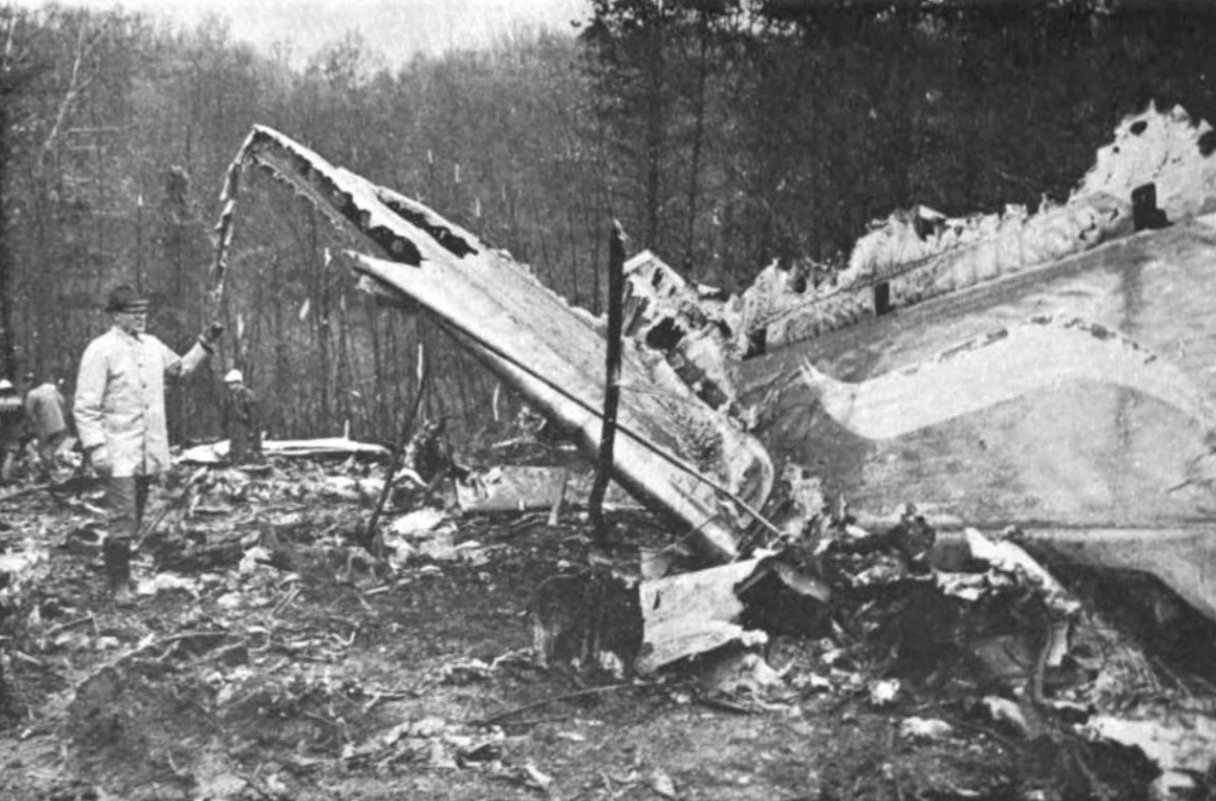
The plane did not reach the runway. It struck a hillside short of the airport, in wooded hills west of the runway, and all 75 people aboard were killed. The aboard group included 37 players, members of the coaching staff, athletic department staff, team supporters and the flight crew.
Among the dead were a city councilman, a state legislator and four physicians, so the loss reached deep into the civic life of Huntington. The loss fell hardest on the football program, which had to be rebuilt.
What the investigators found
The National Transportation Safety Board investigated the crash, and its final report was issued in April 1972. It found that the aircraft descended below the minimum descent altitude for a non-precision approach without visual contact with the runway, in fog and low visibility. The board could not determine why the descent occurred and named two likely explanations: improper use of cockpit instrument data, or an altimetry system error. It found no failure of the aircraft structure or primary flight controls.
The board also made recommendations after the accident, including equipment recommendations such as ground proximity warning devices and surveillance and inspection of flight operations.
The crash nearly ended Marshall's football program. Football returned in 1971 under head coach Jack Lengyel, who was hired after Dick Bestwick backed out. The new team was organized by Red Dawson from junior varsity players of the 1970 season and from students and athletes in other sports.
East Carolina and the memory of the team
For East Carolina, the game was a 17–14 win that has since been overshadowed by the tragedy. The school has kept memorial plaques honoring the dead at its stadium, and the two schools have remained linked in public memory of the crash, which is tied to the game and to the Greenville community that hosted the team that day.
Marshall's remembrance of the crash has been widely told, including in the 2006 film We Are Marshall, which was based on the events. Because a film dramatizes history, readers should check details against the NTSB report and contemporary records.
The crash is remembered in Huntington as a defining event in the university's history. Its memory also connects to Greenville, where the team played its game before boarding the plane for home.
Citation information
- Article title
- Flight 932: The Marshall Team’s Last Trip Home From a North Carolina Game
- Author
- admin
- Website name
- North Carolina Backstory
- URL
- https://northcarolinabackstory.com/flight-932-the-marshall-teams-last-trip-home-from-a-north-carolina-game/
- Original published date
- November 14, 2026
We strive for accuracy and fairness. If you see something that doesn’t look right, contact us.