Richard Gatling’s Machine Gun: From a Hertford County Farm to the Army’s First Order
A farm boy from northeastern North Carolina patented seed planters before he built a hand-cranked gun that could fire again and again without reloading.
- When
- 1862
- Where
- Hertford County, North Carolina
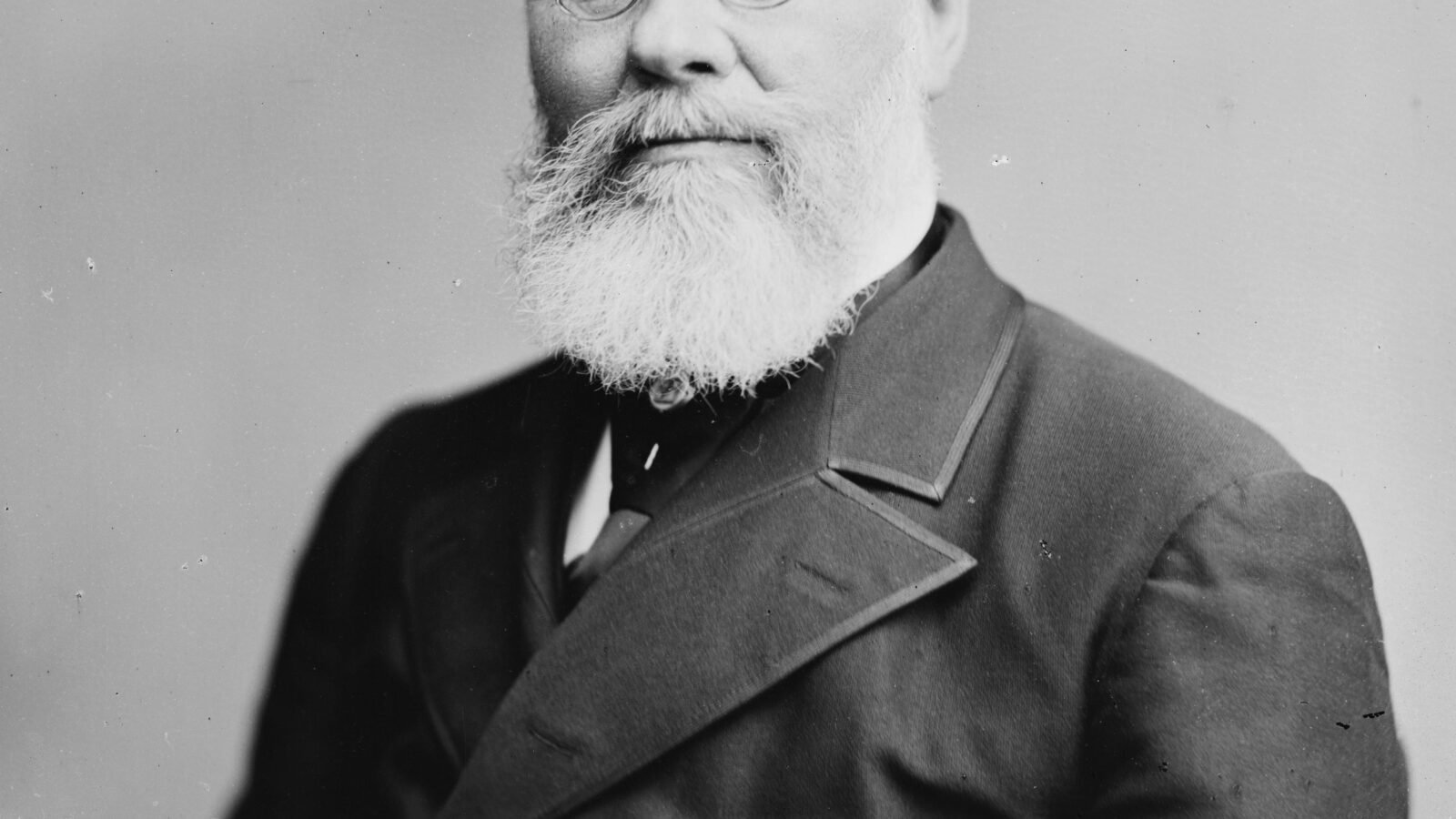
Richard Jordan Gatling was not a soldier when he began sketching a gun in 1861. He was a farm-machinery man who had spent his working life trying to make planting and sowing faster. When he finished his drawings in 1862, the result looked less like a rifle than like a piece of agricultural equipment: a cluster of barrels around a central shaft, a hopper on top, and a hand crank on the side.
The gun he patented that year would become known as the Gatling gun. It was not the first repeating weapon, but it is often described as the first successful machine gun. Getting from a farm in Hertford County, North Carolina, to a federal order for 100 guns took about four years.
A farm boy with a mechanical bent
Gatling was born in 1818 on his family's farm near Murfreesboro, in Hertford County, in the northeastern corner of North Carolina. The county was built on farming, and the Gatling family was part of that world. Young Richard grew up around planting and harvesting and, by his own later account, spent a good deal of time thinking about how to do the work with less labor.
He studied medicine for a period and attended lectures in Ohio, but he did not make his living as a doctor. His real interest was in machines. In 1844 he received a patent for a seed planter, and he worked on other farm equipment. He had also developed a screw propeller, but John Ericsson was granted the patent for it first. The planter was intended to sow seed more evenly and quickly than hand methods allowed.
Gatling spent part of the 1840s in St. Louis, Missouri, where he worked on his inventions and tried to find backers. He later moved to Indianapolis, Indiana, where he established a business around his machinery. Those years taught him how to deal with manufacturers, buyers and patent law, skills that would matter later.
A gun built on a farm machine principle
The idea behind the gun was simple to describe. Several barrels were arranged around a central axle. As a hand crank turned the axle, each barrel in turn was loaded from a hopper, fired, and cleared, so that one gunner could keep fire going without the pause of reloading a single barrel after every shot.
Gatling received a United States patent for the gun on November 4, 1862. The first working guns were built in Cincinnati, Ohio, at the foundry of Miles Greenwood and Company. Early models were built to fire the standard .58-caliber rifle-musket cartridge. The first guns were mounted on a field carriage, and the design was shown to officials and military men in demonstrations.
Gatling said he hoped a rapid-firing gun would reduce the number of soldiers needed on the battlefield. That explanation is widely repeated, and it fits the bloody campaigns of the period.
Slow sales during the war
Selling a new weapon to the army in wartime proved difficult. The Union army was buying large quantities of standard rifles and cannon, and officers were not eager to add a weapon that needed special ammunition and a new kind of supply. Gatling's early guns were tested and demonstrated, and a small number were used in the field, but the war ended before the gun was adopted in quantity.
Gatling worked to improve the design during these years. He also dealt with manufacturers who made the guns and with buyers who were skeptical about them. The gun's reputation grew through tests and demonstrations rather than through a large body of combat use.
The 1866 order for 100 guns
In 1866, the United States Army placed an order for 100 Gatling guns. It was the first significant purchase of the weapon by the federal government. The order marked the point where the invention moved from the workshop and demonstration field into the army's supply system.
Production of the guns was taken over by a larger manufacturer in the years that followed. The Colt company in Hartford, Connecticut, became the best-known builder of Gatling guns. The arrangement reflected a common pattern of the time: an inventor held the patents, and a manufacturer with the tooling built the weapons in volume.
The guns saw service in later decades, including in the Indian Wars and in colonial campaigns overseas, and the design was refined through the 1870s and 1880s. Gatling's name became attached to the machine gun, which later generations would develop into the heavier weapons of the twentieth century.
Citation information
- Article title
- Richard Gatling’s Machine Gun: From a Hertford County Farm to the Army’s First Order
- Author
- admin
- Website name
- North Carolina Backstory
- URL
- https://northcarolinabackstory.com/richard-gatlings-machine-gun-from-a-hertford-county-farm-to-the-armys-first-order/
- Original published date
- November 15, 2026
We strive for accuracy and fairness. If you see something that doesn’t look right, contact us.