
Hurricane Fran, September 1996: A Storm That Struck Near Wilmington
In September 1996 a Category 3 hurricane came ashore near Wilmington, North Carolina, and its rain flooded communities as far inland as Raleigh.
- When
- 1996
- Where
- Wilmington, New Hanover County, North Carolina
By the early hours of September 6, 1996, Fran had come ashore near Wilmington the evening before, and its winds and storm surge were battering the North Carolina coast.
The storm was Hurricane Fran. It had begun thousands of miles away as a disturbance over Africa, and by the time it reached the Carolinas it was a major hurricane. Its path across the state was a lesson in how far a single storm's damage can reach, from the sandy beaches of the Cape Fear coast to the rain-soaked streets of the state capital.
From a wave off Africa
Fran started as a tropical wave, a cluster of thunderstorms moving west across the Atlantic from the coast of Africa in late August 1996. Such waves are common in the late summer, and most fizzle out. This one organized into a tropical depression and then a tropical storm as it crossed the open ocean.
The National Hurricane Center in Miami tracked the system as it strengthened. Over the next few days Fran became a hurricane, moving northwest toward the United States. Forecasters watched it closely because its track bent toward the Southeast coast, where storms of this kind had caused serious damage in earlier years.
By the first days of September, the forecast had narrowed, and Fran was heading for the Carolinas.
Landfall at Cape Fear
Fran came ashore near the mouth of the Cape Fear River as a Category 3 hurricane on the Saffir-Simpson scale. Sustained winds at landfall were about 115 miles per hour, with gusts as high as about 125 miles per hour, and the winds drove a storm surge of about 12 feet onto low-lying land.
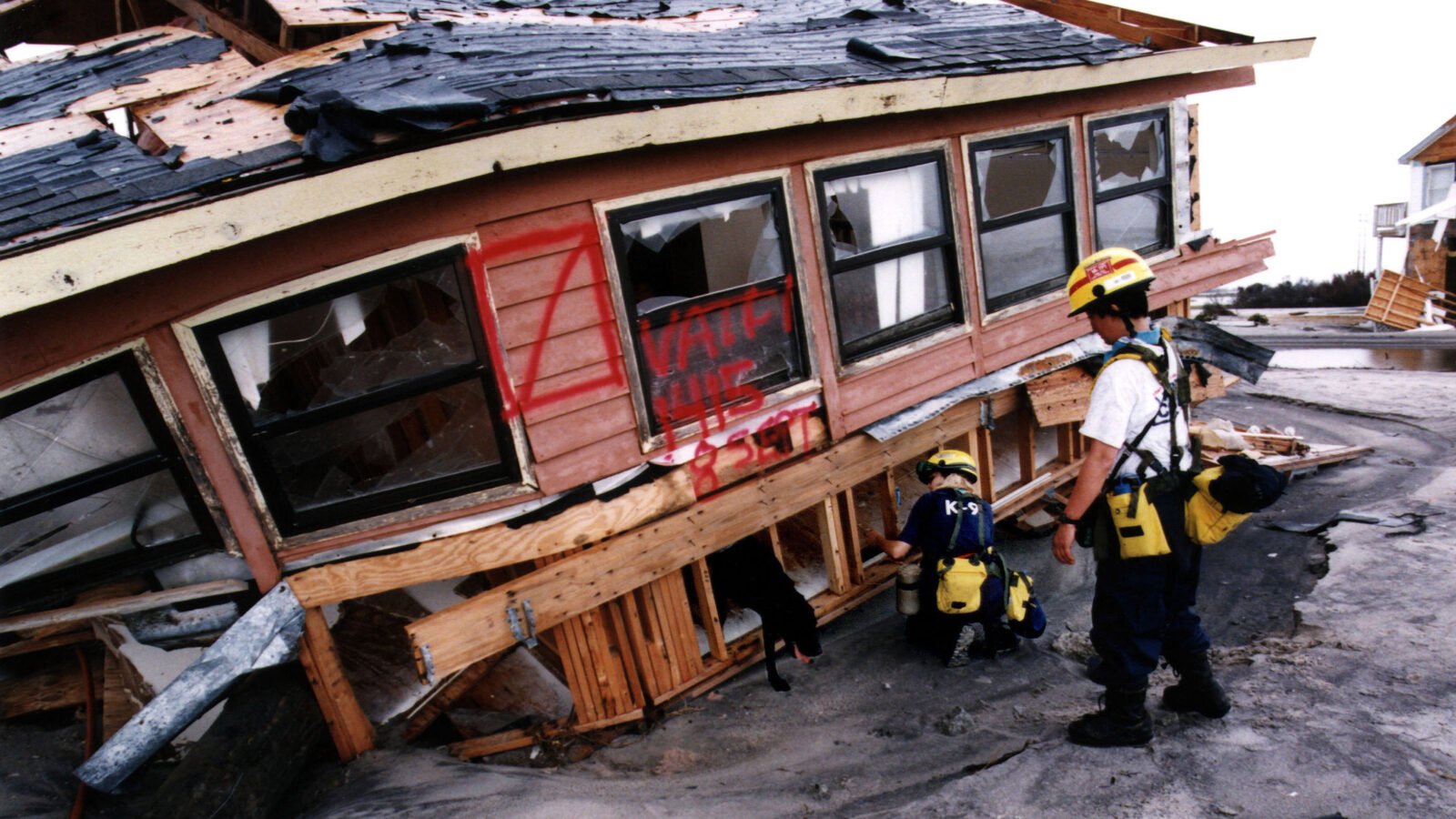
Wilmington sat close to the landfall point. Trees and power lines came down across New Hanover County, and the surge flooded parts of the waterfront and nearby communities. Many homes near the coast were damaged or destroyed, and electricity was cut off across a wide area for days.
Because Fran's circulation was large, hurricane-force winds were likely felt over much of the North Carolina coast, not only near the center. The damage was widespread along the coast and severe where the storm's path was most direct.
Rain, rivers and the capital
Once Fran moved inland, it weakened, but it still carried a great deal of moisture. Heavy rain fell across central North Carolina, and rivers and creeks rose quickly. Flooding reached the Raleigh area, a city that sits well inland from the coast.
The rain caused damage far from the shoreline. Roads were closed, and low-lying neighborhoods flooded. The inland flooding showed that a hurricane's threat does not end when the eye moves over land.
Fran caused deaths in North Carolina and in other states along its path, and it left damage across the eastern United States that ran into the billions of dollars.
A storm that changed the list and the state's habits
Fran was a major test for North Carolina's emergency response. Nearly half a million tourists and residents were evacuated from the coasts of North and South Carolina, and the storm's losses were described as the worst recorded natural economic disaster in the state's history.
The World Meteorological Organization, which maintains the rotating lists of Atlantic storm names, retired the name Fran in 1997 because of the damage it caused. Fay was chosen to replace it on the list, and Fran has not been used since.
For Wilmington, Fran remains a reference point in the coast's hurricane history. The storm showed how a city near the center of a landfall can take the full force of wind and water in a few hours, and how long the recovery can last.
Citation information
- Article title
- Hurricane Fran, September 1996: A Storm That Struck Near Wilmington
- Author
- admin
- Website name
- North Carolina Backstory
- URL
- https://northcarolinabackstory.com/hurricane-fran-september-1996-a-storm-that-struck-near-wilmington/
- Original published date
- November 15, 2026
We strive for accuracy and fairness. If you see something that doesn’t look right, contact us.