Bodie Island Lighthouse: Three Towers, a Confederate Explosion and the 1872 Light
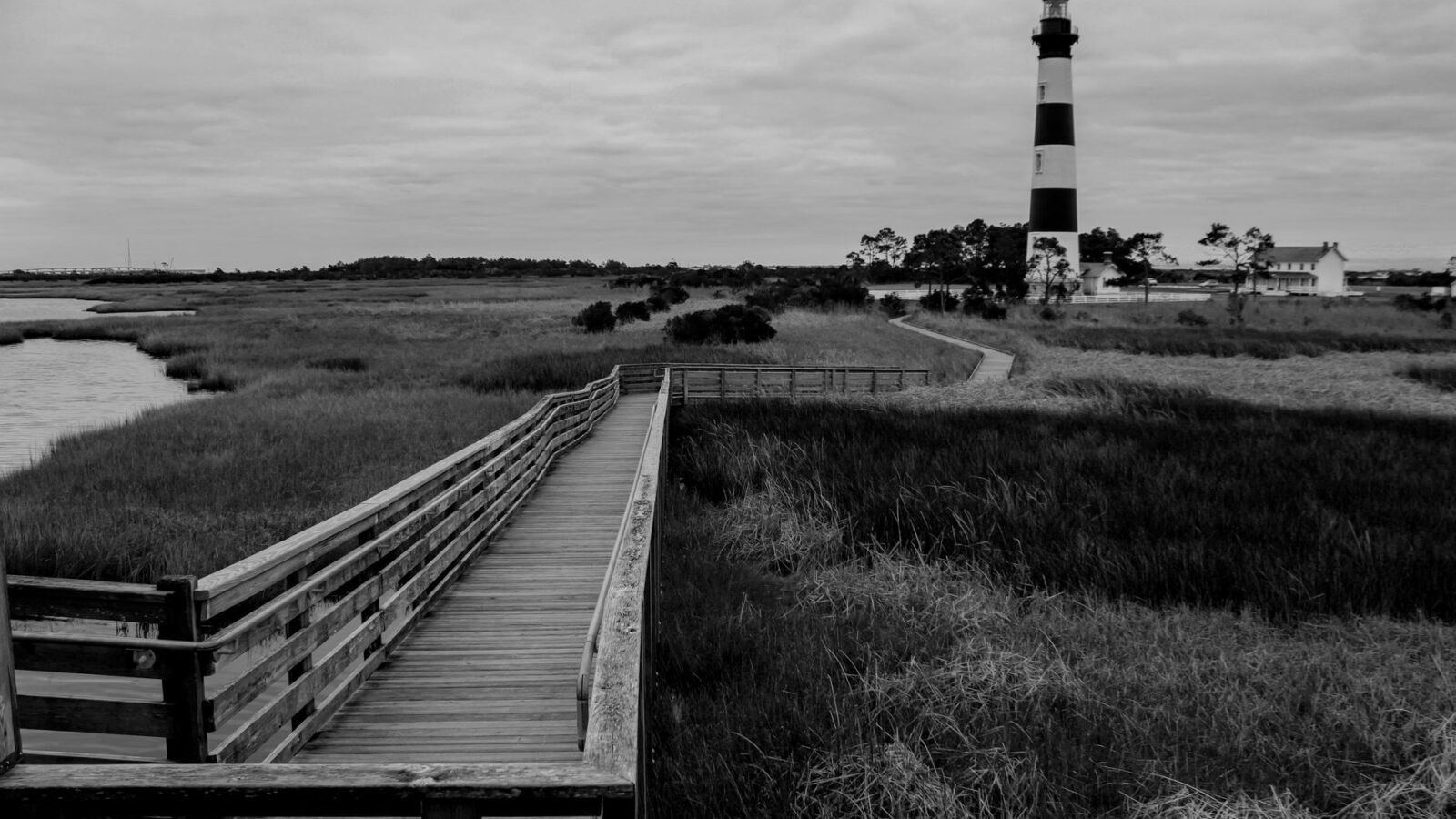
Three towers have stood near Oregon Inlet since 1847. One leaned, one was blown up by Confederate troops in 1861, and the third, lit in 1872, still stands on the Outer Banks.
- When
- 1872
- Where
- Nags Head, Dare County, North Carolina
In 1861, the Confederate States of America was fighting to hold the North Carolina coast, and the tower at Bodie Island had become a liability. A lighthouse guided ships, and Confederate commanders feared Union forces would use the tower as a lookout post. Retreating Confederate troops decided it had to go.
The tower they destroyed was the second one built on the sandy land south of the new Oregon Inlet, on what is now Pea Island. It was not the first, and it was not the last. The Bodie Island Lighthouse story is a story of three towers, a shifting inlet and a government that kept rebuilding where the sand kept moving.
An inlet that opened in a storm
Oregon Inlet did not exist until a storm cut it open in 1846. Before that, ships in Pamlico Sound had no inlet at this spot to use, since an earlier inlet here had closed in 1798. Congress had set aside money for a light on this stretch in 1837, before the new inlet opened.
The first tower was completed in September 1847 but was not lit until early 1848. Like many coastal lights of that era, it was a brick structure built on the sand, with the federal government responsible for its upkeep through the Treasury Department's lighthouse system. It stood 54 feet tall, with a keeper's dwelling and a cistern beside it.
A tower that leaned
The first tower began to fail within a few years. Its brick foundation rested on mud and sand, and by 1850 the tower was leaning eastward, more than a foot out of plumb.
By the late 1850s the government had decided to replace it. Congress approved $25,000 for a new tower, and the second tower, built on a pile foundation, was completed in 1859. Sources differ on the first tower's fate: one account says it was abandoned and demolished by 1858, while another says it was razed after the new light was lit.
The tower the Confederates blew up
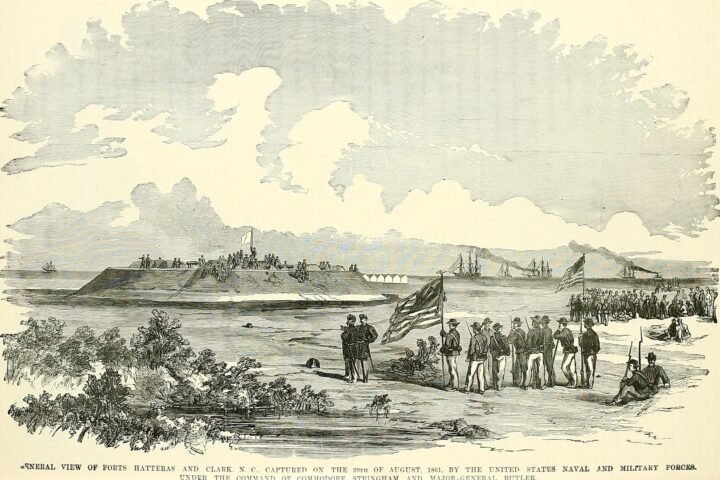
The 1859 tower lasted barely two years in its original role. When the Civil War reached the Outer Banks in 1861, Confederate forces had built forts at the inlets to guard the coast. As Union troops began taking those forts that summer, the Confederates decided the lighthouse was too useful to leave standing.
Confederate troops destroyed the Bodie Island tower in 1861, before abandoning Oregon Inlet in November. Union forces had taken the Hatteras forts in late August, and the tower was left in ruins for the rest of the war. No replacement light stood there until 1872.
The 1872 tower and its first-order lens
After the war, the federal government returned to Bodie Island. The Lighthouse Board, which by then oversaw American lighthouses, approved a new tower on the site after ship captains petitioned for one. Work began in 1871, and the new brick tower was lit on October 1, 1872.
The new light was equipped with a first-order Fresnel lens, the most powerful of the seven lens orders the Lighthouse Board was introducing at the time. The lens was made by Barbier and Fenestre in Paris, and its fixed white light could be seen for more than eighteen miles.
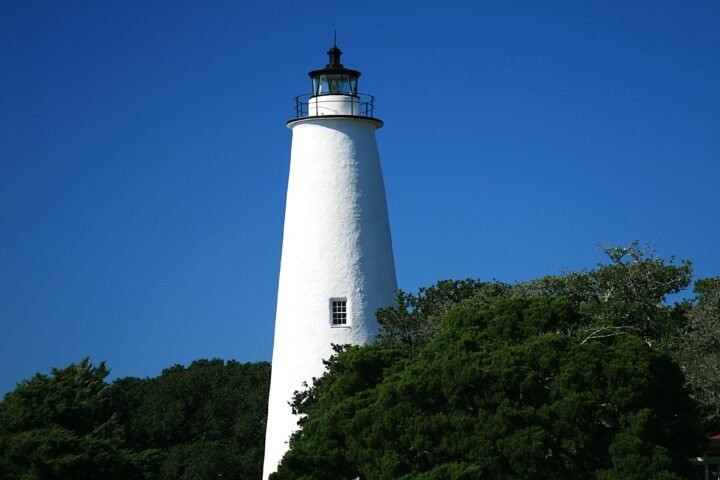
The 1872 tower is the one visitors see today. It is a tall brick tower about 156 feet high, standing north of the inlet on Bodie Island. It has survived the shifting sand that doomed its predecessors, though it underwent a major rehabilitation from 2009 to 2012.
A moving inlet and a different story at Hatteras
Oregon Inlet has never stayed put. Between 1846 and 1989 it migrated about two miles south of its original breach, and it remains open today. A lighthouse on a moving inlet is in a difficult position, because the hazard it marks can change faster than the government can respond.
The Outer Banks offer another example of an offshore tower threatened by the sea. The Cape Hatteras Lighthouse was moved inland in 1999 because erosion had left the ocean about 15 feet from its base. That relocation is a separate story and a different kind of problem. At Bodie Island, the first two towers were lost to sand and war, while the third was built on a new 15-acre site north of the inlet with a sturdier foundation.
Citation information
- Article title
- Bodie Island Lighthouse: Three Towers, a Confederate Explosion and the 1872 Light
- Author
- Samantha Brown
- Website name
- North Carolina Backstory
- URL
- https://northcarolinabackstory.com/bodie-island-lighthouse-three-towers-a-confederate-explosion-and-the-1872-light/
- Original published date
- November 20, 2026
We strive for accuracy and fairness. If you see something that doesn’t look right, contact us.