Cone Mills’ White Oak Plant in Greensboro: Denim, Family Capital and a Textile Empire
In 1895, two brothers from a German-Jewish merchant family opened a cotton mill in Greensboro. Their White Oak plant, opened in 1905, became one of the country's best-known denim plants.
- When
- 1905
- Where
- Greensboro, Guilford County, North Carolina
Greensboro in the mid-1890s was a railroad town in the North Carolina Piedmont, where several rail lines met and cotton could be brought in from the surrounding countryside. In 1895 the Cone brothers opened their first Greensboro mill, Proximity, near the rail line. It turned out to be the start of something much larger.
The mill was built by Moses Herman Cone and Ceasar Cone, two brothers whose family had come to the United States from Germany and built its money in merchandising. Their story shows how Jewish merchant families in Baltimore and New York turned trade in cloth into ownership of mills in the South, and how that ownership reshaped the towns around them.
Merchants before manufacturers
The Cone brothers grew up in a German-Jewish immigrant family in Baltimore whose firm, H. Cone & Sons, was a wholesale grocery business. Moses and Ceasar learned the trade in their father's firm, traveling through the South to take orders and barter textiles for groceries. That work exposed them to the cloth that southern mills produced.
By 1891 the brothers had set up the Cone Export and Commission Company, which sold textiles for southern mills. By the mid-1890s it was serving about 90 percent of the South's mill owners. Having been paid in cloth by local mills, the Cones also bought interests in cotton mills in Asheville, Salisbury and Gibsonville.
A mill on the Piedmont railroad
The Cones opened their first Greensboro mill, Proximity, in 1895. The White Oak plant followed in 1905, named for a large old white oak on the site. The brothers chose Greensboro in part for its six rail lines and access to cotton.
Proximity began weaving denim for work clothes about a year after it opened. White Oak, opened in 1905, became one of the largest denim mills in the world, and in 1915 the Cones began making denim for Levi Strauss.
Family capital and the Greensboro mills
The Cones financed their expansion mainly through family and business relationships within the merchant networks of Baltimore and New York. Capital from those circles made it possible to build more than one plant in Greensboro, and the company grew from a single mill into a group of plants in the city and elsewhere in the Carolinas. Historians who study the Cone firm generally point to this web of family and commercial ties, rather than to any single large investor, as the basis of its growth.
Moses Cone died in 1908 and Ceasar Cone in 1917. After Ceasar's death, the younger brothers Julius and Bernard took over leadership of the business. Bertha Cone, Moses's widow, set up a trust in 1911 to fund a hospital in his memory. The Moses H. Cone Memorial Hospital opened in 1953, after her death in 1947 and with money from her estate.
Life in the mill village
The Cones built mill villages near their Greensboro plants, with company housing for workers. Accounts of the company describe the villages as a social support network for the workers who lived there.
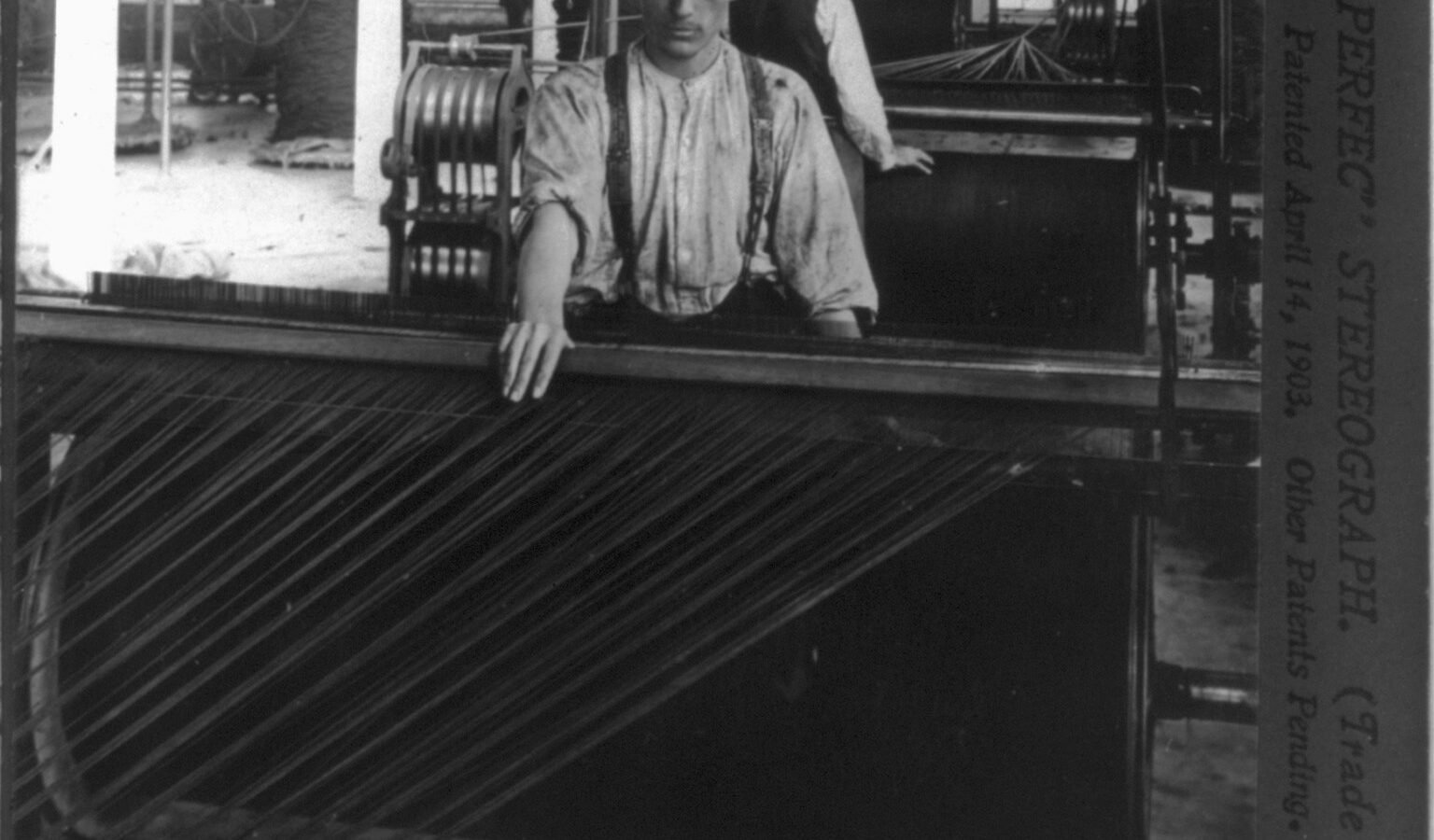
Mill work was hard and often dangerous. Long shifts, noise and cotton dust were constant features of the plant floor, and wages in the Southern mills were generally lower than those in the North. Workers also took part in the broader labor struggles of the textile South in the 1920s and 1930s, a period when organizing drives and strikes repeatedly tested the mill towns. The details of how these struggles played out at the White Oak plant itself are less well documented than the company's own history, and researchers should check specific claims against local and union records.
From denim empire to closing
Over the twentieth century, the White Oak plant became one of the best-known denim producers in the United States. The Cones began making denim for Levi Strauss jeans in 1915, and the company supplied Levi's for decades.
The company's fortunes declined in the late twentieth and early twenty-first centuries, as shrinking profits followed a worldwide shift toward the lowest-cost producers. Cone Mills filed for Chapter 11 bankruptcy protection in 2003. In 2004 its assets were acquired by W. L. Ross & Co. and combined into International Textile Group. The White Oak plant ceased operations on December 31, 2017, ending more than a century of production on the site. The hospital that bears the family's name remains in operation as part of Cone Health.
Citation information
- Article title
- Cone Mills’ White Oak Plant in Greensboro: Denim, Family Capital and a Textile Empire
- Author
- Dylan Thomas
- Website name
- North Carolina Backstory
- URL
- https://northcarolinabackstory.com/cone-mills-white-oak-plant-in-greensboro-denim-family-capital-and-a-textile-empire/
- Original published date
- November 20, 2026
We strive for accuracy and fairness. If you see something that doesn’t look right, contact us.