Bennett Place, April 1865: The Largest Surrender of the Civil War
In a small North Carolina farmhouse, Sherman and Johnston settled the largest surrender of the Civil War, but only after Washington threw out their first deal.
- When
- 1865
- Where
- Durham, North Carolina
On the morning of April 17, 1865, Major General William T. Sherman was about to board a train in Raleigh when a telegraph operator handed him a message. It reported that President Abraham Lincoln had been assassinated. Sherman swore the operator to silence and rode west to meet the Confederate general he had been chasing across the Carolinas.
The meeting took place at a farm owned by James and Nancy Bennett, a few miles outside Durham Station. Over the next nine days, in and around a small farmhouse, the two commanders produced one agreement that Washington refused and a second that ended the war for roughly 90,000 Confederate soldiers.
Two armies and a collapsing government
By April 1865 the Confederacy was coming apart. Robert E. Lee surrendered the Army of Northern Virginia to Ulysses S. Grant at Appomattox Court House on April 9. Richmond had fallen, and Jefferson Davis and his government were moving south through North Carolina.
General Joseph E. Johnston still had an army in the state, made up largely of the remnants of the Army of Tennessee and other units. Sherman's forces had fought him at Bentonville in March and then occupied Raleigh on April 13. Johnston, with Davis's authorization, had already written to Sherman proposing a halt to the fighting, and Sherman agreed to meet.
A calamity and a generous deal
The first meeting at the Bennett farm took place on April 17. According to Sherman's later account, he handed Johnston the telegram about Lincoln's death and watched him react with visible distress. Johnston is said to have called the assassination a terrible blow to the South, since he believed Lincoln would have been the more lenient victor.
The two men talked again on April 18, and this time Confederate Secretary of War John C. Breckinridge joined them, in his capacity as a major general. They signed a document that went far beyond military matters. It promised to recognize Southern state governments once their officers took an oath of allegiance, to restore federal courts, to guarantee political rights and property, and to grant a general amnesty.
Sherman believed he was honoring the spirit of Lincoln's talk of generous peace terms, which he had heard at City Point, Virginia, the previous month. But he was a soldier, and he had stepped into political territory that belonged to the government.
Washington says no
President Andrew Johnson and his cabinet rejected the agreement on April 21. Secretary of War Edwin Stanton and others were angry, and the mood in the North after Lincoln's murder made leniency politically impossible. Press accounts questioning Sherman's judgment, and in some cases his loyalty, deeply offended him.
Grant traveled to Raleigh, arriving on April 24, and told Sherman to end the truce. Grant did not take over the negotiations. He stayed in Raleigh and let Sherman handle the final talks, which was a courtesy to a friend. Sherman notified Johnston that the truce would end, and Johnston asked to meet again.
April 26 and what followed
On April 26 the two generals met at the Bennett farm for a final time. This time they limited themselves to military terms modeled on those Grant had given Lee. Johnston's soldiers would lay down their arms, be paroled, and go home, and officers could keep their horses and personal belongings. The surrender covered Confederate forces in North Carolina, South Carolina, Georgia and Florida, a total commonly given as about 89,000 men, and it was the largest single surrender of the war.
The war did not formally end that day. Richard Taylor surrendered in Alabama on May 4, Davis was captured in Georgia on May 10, and Kirby Smith's Trans-Mississippi forces surrendered at the end of May and in early June. Sherman, still angry, publicly refused to shake Stanton's hand at the Grand Review in Washington on May 24.
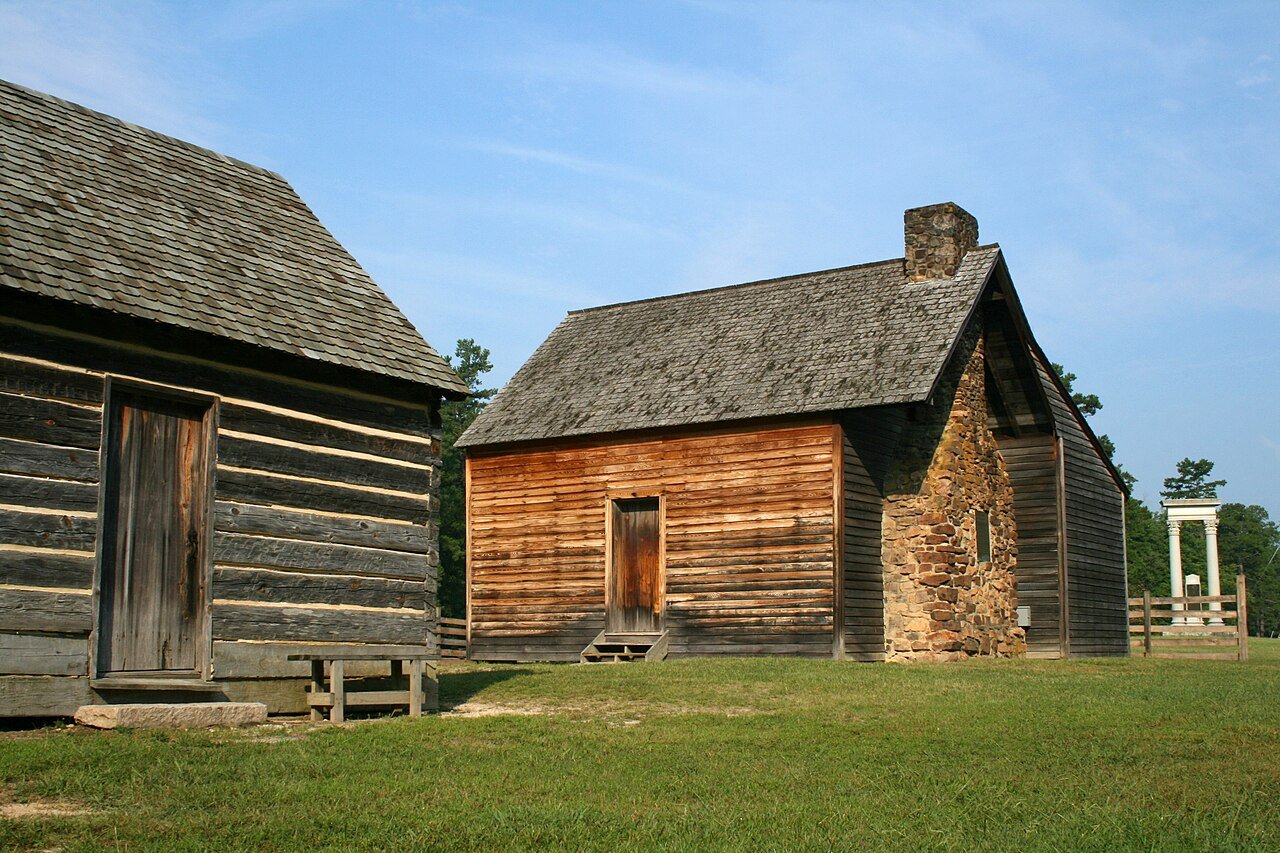
The Bennett farm itself has a smaller legacy. The original house burned in 1921, and a reconstruction now stands on the site as a North Carolina state historic site. Local tradition also credits the occupying soldiers with spreading the reputation of Durham's tobacco, since many bought or requested it after the surrender, which helped the town's rise as a tobacco center.
Citation information
- Article title
- Bennett Place, April 1865: The Largest Surrender of the Civil War
- Author
- admin
- Website name
- North Carolina Backstory
- URL
- https://northcarolinabackstory.com/bennett-place-april-1865-the-largest-surrender-of-the-civil-war/
- Original published date
- April 8, 2026
We strive for accuracy and fairness. If you see something that doesn’t look right, contact us.