Camp Butner’s Prisoners: German and Italian POWs in Granville County, 1944–1946
In Granville County, prisoners of war in faded uniforms worked the fields, mills and kitchens of a wartime Army camp while the farms and factories around them lost their men to the draft.
- When
- 1944
- Where
- Butner, Granville County, North Carolina
In 1944, work details of German and Italian prisoners of war left the Camp Butner compound each day for farms and other jobs in the surrounding area. The men rode out through the camp gates on the way to their assignments.
The men were headed for a tobacco field, a mill or a farm short of hands. Across the country in 1944, the Army was putting prisoners to work in this kind of job, because the home front had too few people to do it.
Farmland becomes an Army camp
Camp Butner began in 1942 as an infantry training post on rolling farmland in southern Granville County, close to the Durham line. The Army acquired the land from local owners, and many farm families were moved off it to make way for training areas, barracks and ranges.
The post took its name from Maj. Gen. Henry W. Butner, a North Carolina-born Army officer. Like many wartime camps, it was built quickly, and it grew into a large installation with room for several infantry divisions to train at once.
By the time prisoners arrived, the camp had a double role. It trained American soldiers for combat, and it held enemy captives who would be put to work in the surrounding counties.
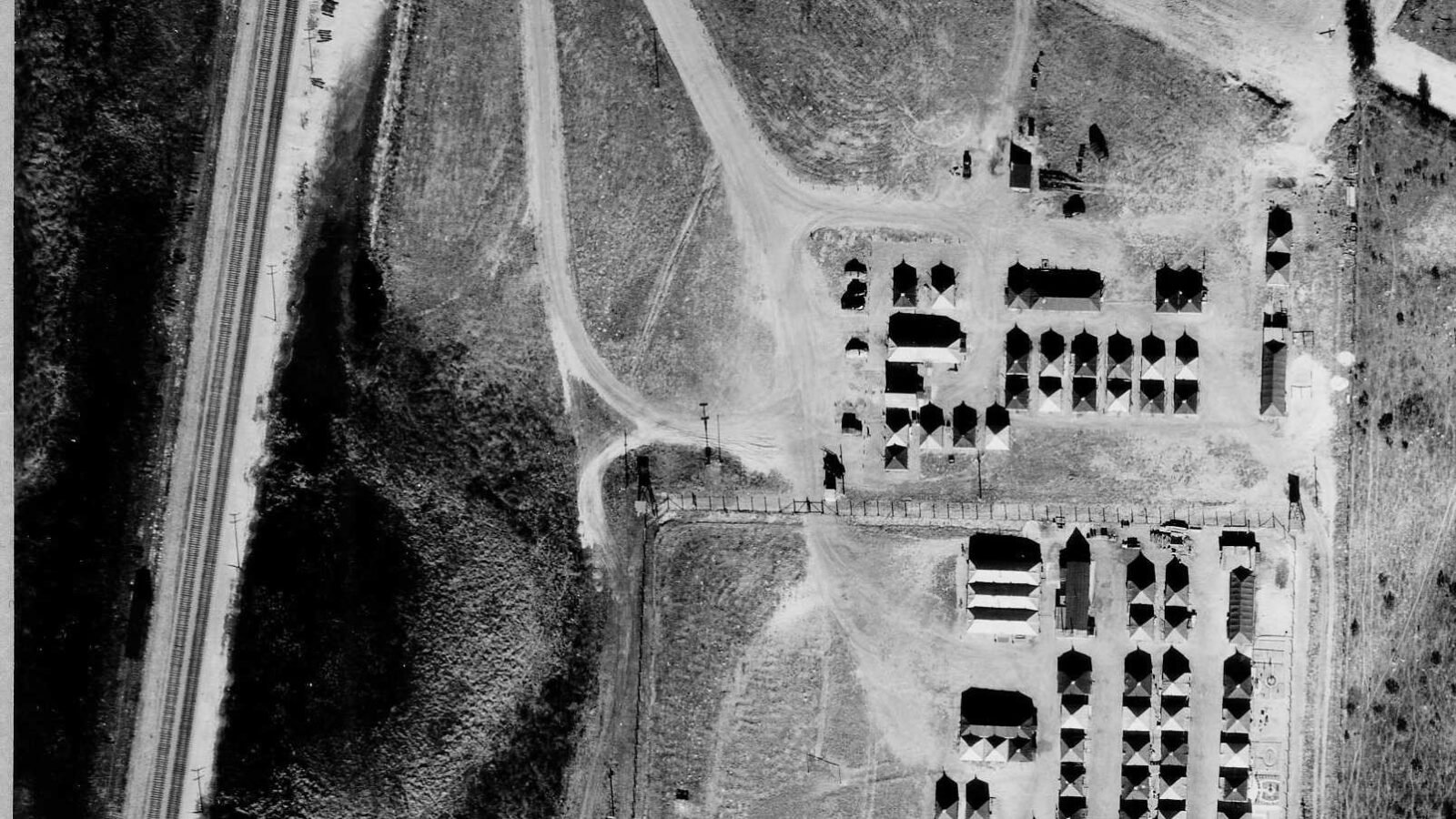
Behind the wire
Prisoners were housed in a separate compound, fenced and guarded. The War Department's Provost Marshal General's Office ran the prisoner-of-war system, and the Geneva Convention set the basic standards for humane treatment, food and medical care.
German and Italian prisoners were generally kept apart. The Italians had surrendered in September 1943, and when the two nationalities were held together, fighting broke out, so the Italians were housed separately. Officers, who were considered more likely to hold Nazi beliefs, were held apart from enlisted men, and camp life was shaped by these divisions as much as by the fences.
Prisoners who were not working had access to sports, classes and a camp newsletter printed in German. The Geneva Convention required that they be treated humanely.
Labor for the home front
Prisoners were assigned to farms in the surrounding counties, to mills and to work details that kept the camp itself running. Some cooked and cleaned in the camp kitchens.
Under the Geneva Convention, prisoners who worked were entitled to pay. The Army set the rate at 80 cents a day for enlisted men, with the money credited in camp scrip rather than cash, which could be spent at the camp canteen.
The arrangement helped solve a real problem. Many men from Granville County and across North Carolina had gone into the military or into war industry jobs, and the fields needed hands at planting and harvest time. Prisoner labor filled gaps that civilian workers could not.
The end of the camp's prisoner years
Prisoner labor continued through 1945 as the war in Europe ended. Prisoners remained in North Carolina until April 1946.
Camp Butner itself was reduced after the war. Its later history is tied to the state hospital and institutional complex that grew up on part of the site, a reminder that the camp's land outlived its wartime purpose.
The prisoners' story is one of work, uncertainty and ordinary routine, set against a war that had sent Granville County's own men far away. It shows how a training camp in the middle of farm country became part of the wartime economy.
Citation information
- Article title
- Camp Butner’s Prisoners: German and Italian POWs in Granville County, 1944–1946
- Author
- admin
- Website name
- North Carolina Backstory
- URL
- https://northcarolinabackstory.com/camp-butners-prisoners-german-and-italian-pows-in-granville-county-1944-1946/
- Original published date
- November 13, 2026
We strive for accuracy and fairness. If you see something that doesn’t look right, contact us.