Ella Baker and the Founding of SNCC at Shaw University, April 1960
Weeks after Greensboro, Ella Baker gathered sit-in students in Raleigh and urged them to stay independent. Her idea of leadership shaped SNCC from the start.
- When
- 1960
- Where
- Raleigh, Wake County, North Carolina
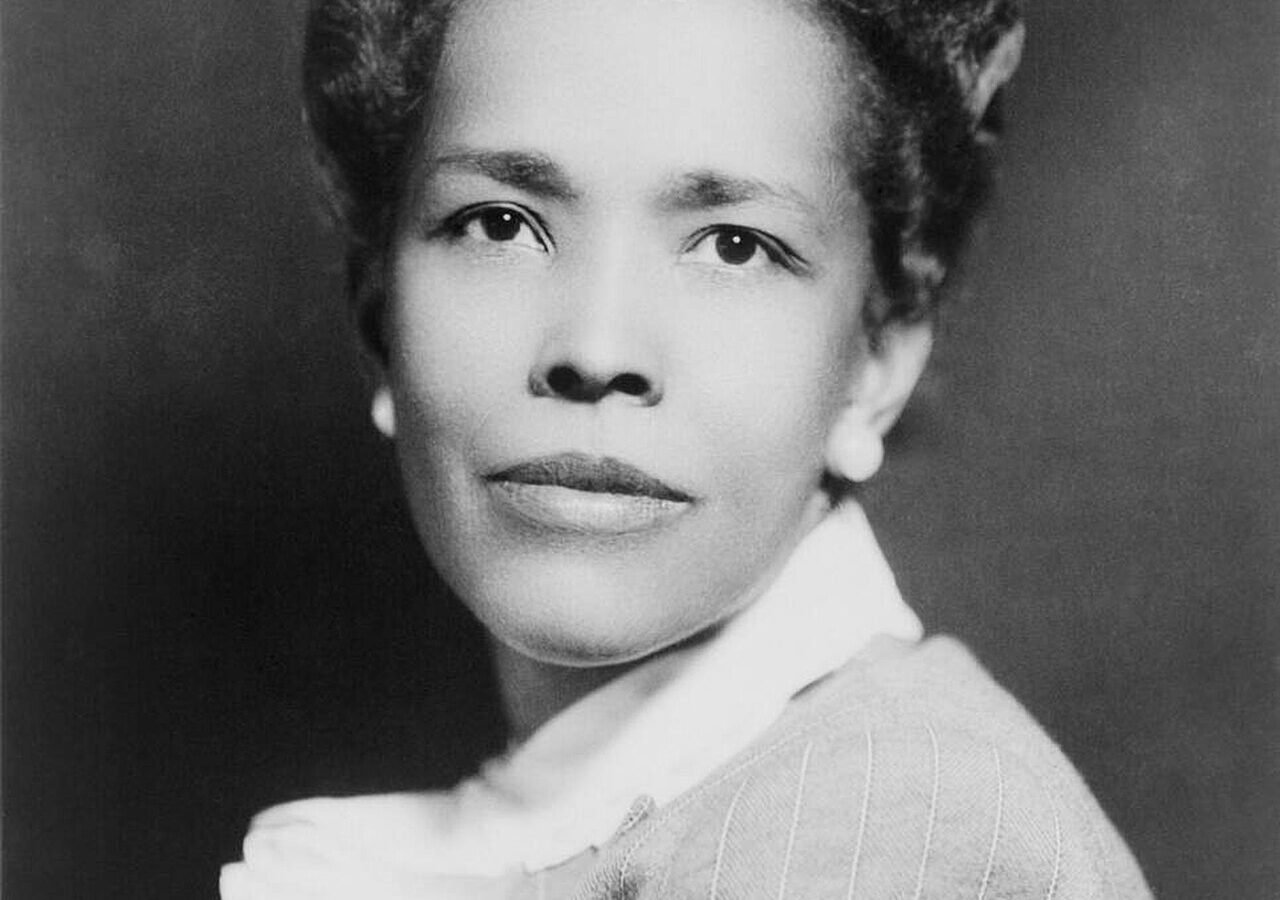
In mid-April 1960, young people from campuses across the South began arriving at Shaw University in Raleigh, North Carolina. Many had spent the previous weeks at lunch counters, being shouted at, arrested or both. They had come to a conference on a historically Black campus, and the woman who had called them together was 56 years old and had no wish to tell them what to do.
Her name was Ella Baker. Over that weekend, April 15 to 17, she helped the students form what became the Student Nonviolent Coordinating Committee, known as SNCC. She also gave them an idea about leadership that would shape the organization for years.
From Greensboro to Raleigh
On February 1, 1960, four students from North Carolina Agricultural and Technical College, Ezell Blair Jr., Franklin McCain, Joseph McNeil and David Richmond, sat down at the whites-only lunch counter at the Woolworth's in Greensboro. Within days the protest spread to other North Carolina cities. Within weeks it had reached cities in several other Southern states.
Baker watched from Atlanta, where she was working in the office of the Southern Christian Leadership Conference (SCLC). She believed the students were doing something new and did not want it absorbed into an older organization. She persuaded SCLC to put up money for a meeting, an amount usually given as about $800, and chose Shaw, her own alma mater, as the site.
A veteran organizer
Baker was born in Norfolk, Virginia, in 1903 and grew up in Littleton, North Carolina. She graduated from Shaw in 1927 as valedictorian. In the 1940s she worked for the NAACP as a field secretary and then as director of branches, traveling through the South to build local chapters. In 1955 she helped found In Friendship, a New York group that raised money to support Southern activists.
She had also come to distrust a certain model of civil rights leadership, one built around a single prominent, usually male and often clergy, figure. Her time at SCLC, which she helped launch in 1957, sharpened that view.
The meeting at Shaw
The Youth Leadership Meeting drew roughly 300 students and observers, according to contemporary accounts, from sit-in communities across the South. Among the speakers were Martin Luther King Jr. and the Rev. James Lawson, a Nashville organizer and nonviolence trainer who had been expelled from Vanderbilt University's divinity school for his protest work. Lawson's address stressed immediate direct action over slow court cases.
Baker's own message was given in an address to the students, later published as "Bigger Than a Hamburger." She argued that the students were after more than access to lunch counters. They were challenging segregation in every aspect of life.
There was a quiet struggle behind the scenes. King and SCLC hoped the students would become a youth wing of SCLC. Baker encouraged them to decide for themselves. The students chose to stay independent and set up a temporary coordinating committee, with Marion Barry of Fisk University as its first chairman. The temporary committee met in Atlanta in May, and an October conference there set up the organization's structure and goals.
Group-centered leadership
Baker's approach is often summarized as group-centered leadership. She held that a movement should develop the abilities of many ordinary people rather than rely on one spokesperson. A phrase often attributed to her states it plainly: strong people do not need strong leaders. Her role at Shaw followed that idea. She posed questions and offered advice, but she left the decisions to the students.
In SNCC this meant long meetings, a preference for consensus, and a focus on local organizing. Young field workers went into rural Southern communities to find local leaders and help them organize. Their work included voter registration drives and the 1961 Freedom Rides, in which John Lewis, Diane Nash and others took part, and in time the Mississippi Freedom Summer of 1964. Baker remained a mentor and adviser to the students.
The method had costs. Consensus decisions could be slow and exhausting. By the mid-1960s SNCC had turned toward Black Power. Baker's influence is clearest in SNCC's early years.
Why it mattered
The Shaw meeting gave a scattered series of protests a lasting organization run by young people. It also showed that the students did not need to be directed by older leaders. Baker died in 1986, and her approach remained a touchstone for later activists. Bernice Johnson Reagon's song "Ella's Song," written in the 1980s, honors her.
Sources
- Veterans of the Civil Rights Movement — The Founding of SNCC (crmvet.org)
- Student Nonviolent Coordinating Committee (H-107) (dncr.nc.gov)
- Baker, Ella Josephine (ncpedia.org)
- Ella Baker (britannica.com)
- Student Nonviolent Coordinating Committee (SNCC) (kinginstitute.stanford.edu)
- Birth of SNCC – SNCC Digital Gateway SNCC Digital Gateway (snccdigital.org)
Citation information
- Article title
- Ella Baker and the Founding of SNCC at Shaw University, April 1960
- Author
- admin
- Website name
- North Carolina Backstory
- URL
- https://northcarolinabackstory.com/ella-baker-and-the-founding-of-sncc-at-shaw-university-april-1960/
- Original published date
- September 26, 2026
We strive for accuracy and fairness. If you see something that doesn’t look right, contact us.