Christoph von Graffenried and the Swiss Settlers Who Founded New Bern in 1710
In 1710 a Bernese nobleman led German and Swiss emigrants up the Neuse River to found a town named for his home city. Within a year, the Tuscarora War had overtaken them.
- When
- 1710
- Where
- New Bern, Craven County, North Carolina
In the autumn of 1710, a column of emigrants reached a point of land where the Neuse and Trent rivers meet in the North Carolina pine country. They had come from the Swiss canton of Bern and from the German Palatinate, and they were looking for land they could own.
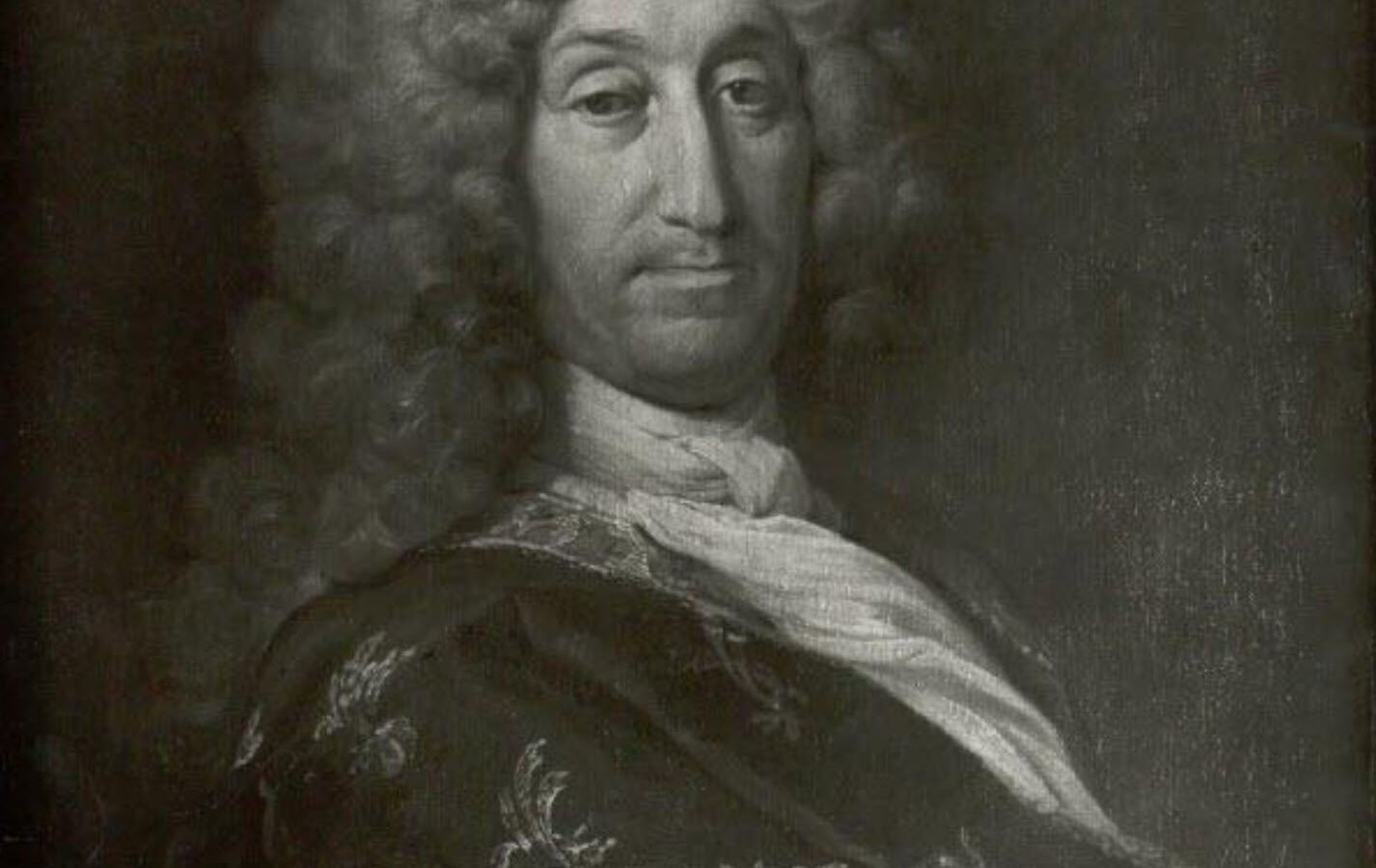
The man leading them was Christoph von Graffenried, a Bernese nobleman who had staked his money and reputation on the venture. The town they laid out at the confluence of the two rivers took the name New Bern, after the city he came from. It was a bold idea on paper. In practice, it was a fragile colony that nearly failed before it had a chance to take root.
A grant from the Lords Proprietors
The scheme began in London. Carolina was then governed by a group of English noblemen known as the Lords Proprietors, who held the colony under a royal charter and profited from selling and leasing land. Their proprietary government had little money to spend on settlement, so they were willing to grant large tracts to anyone who would bring in colonists.
Franz Ludwig Michel, a fellow Swiss who had made several earlier trips to America, and Graffenried secured a grant from the Lords Proprietors in 1709 at the Neuse and Trent confluence. Sources give the grant as 10,000 acres, while others give 19,000 acres including 5,000 acres held personally by Graffenried. In return, they agreed to bring settlers and pay quitrents on the land. The arrangement tied the colony's survival to its ability to recruit and keep people alive in a place most of them had never seen.
Recruiting was not difficult. Many Palatines had been displaced from their homes for their Protestant faith, and thousands of refugees had gathered in England. Many of them were eager to accept passage to America, and a smaller group of Swiss emigrants joined them. Records give about 92 Palatine families (roughly 650 people) and 156 Swiss settlers, though totals vary between sources.
The voyage and the difficult first winter
The emigrants sailed from England in 1710 and landed at Hampton, Virginia, in September. From there they moved to the Neuse River and the site Graffenried had chosen. The crossing was reportedly relatively uneventful, but illness and shortages took a toll once the settlers reached the new site.
The settlers had to work to establish the settlement while short of food and supplies. The promised funds for provisions did not arrive, because a dispute in the Carolina government left the deputy governor unable to pay for them. The survivors therefore depended heavily on help from outside the settlement.
Among the expedition's members was John Lawson, the English surveyor and author of the 1709 book A New Voyage to Carolina, who had been appointed Surveyor General of the colony. His mapping and knowledge of the region helped lay out the town and its lands. The surveyor's work gave the settlement a plan, even as the people living on that plan remained in danger.
Relations with the Tuscarora
The land the colonists claimed was not empty. Tuscarora people lived along the Neuse and nearby rivers, and their village of Chattoka lay where the town was laid out. Relations were tense, and the settlers' expansion pressed on Tuscarora land, which the Tuscarora resented.
Accounts of how the colonists obtained their land differ, and the surviving sources are written mostly by the newcomers and their English backers. Historians have debated how much the settlers understood about Tuscarora claims and how fairly the purchases and agreements were made. What is clear is that the colonists were a small group living close to a larger Native population with its own grievances.
Governor Edward Hyde had authority over the colony, but the colonial government was divided and short of money. The Swiss and German settlers were left to manage much of their own affairs, which added to the uncertainty of their position.
Why the founding mattered
New Bern is the second-oldest European-settled colonial town in North Carolina, after Bath. It became the seat of the colonial government and a center of trade, and it served as the state capital from 1770 to 1792. Its origins in the 1710 settlement remain a clear link between Bern and the American South.
The founding also showed how fragile proprietary colonization could be. The colonists had been recruited with land promises and then left to face disease, hunger and an unfamiliar environment with little outside help. Their hardships revealed how much early settlements depended on backers who were often far away.
In early September 1711, Graffenried was seized by Tuscarora while traveling up the Neuse River with John Lawson, who was killed. The Tuscarora War broke out on September 22, 1711, when Tuscarora forces attacked settlements. Graffenried was held for several weeks and later released. He left New Bern in 1713, and the settlers who remained were left to rebuild under very different conditions.
Citation information
- Article title
- Christoph von Graffenried and the Swiss Settlers Who Founded New Bern in 1710
- Author
- Dylan Thomas
- Website name
- North Carolina Backstory
- URL
- https://northcarolinabackstory.com/christoph-von-graffenried-and-the-swiss-settlers-who-founded-new-bern-in-1710/
- Original published date
- November 19, 2026
We strive for accuracy and fairness. If you see something that doesn’t look right, contact us.