The Confederate Women’s Home in Fayetteville: A Veterans’ Shelter Opens in 1915
In November 1915, Fayetteville opened a home for elderly Confederate widows and women. Its founding shows how the South's memory of the war was being built.
- When
- 1915
- Where
- Fayetteville, Cumberland County, N.C.
In the fall of 1915, Fayetteville, the river town in Cumberland County that had seen both the Confederate and Union armies pass through, prepared to take in a new kind of resident. The Confederate Women's Home was meant for elderly women whose lives were tied to the Confederate cause: the wives, daughters and widows of North Carolina's Confederate veterans who were 65 or older and in need.
The home's opening in November 1915 came roughly half a century after Appomattox. By then, the war had been turned into a story about devotion and loss, and the institutions that cared for its survivors were part of that story. The home is a useful place to see how that story was put into practice.
A town with a wartime record
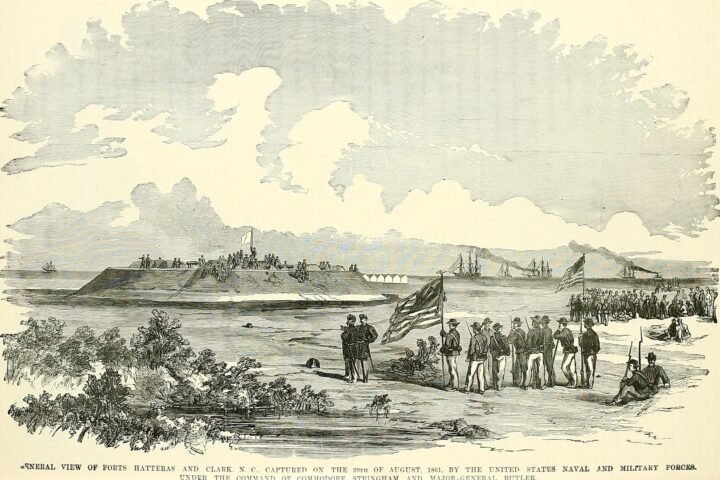
Fayetteville had a direct connection to the war. In April 1861, North Carolina state forces seized the federal arsenal there, and in March 1865 Union troops under William T. Sherman occupied the town as his army moved north through the Carolinas. Union troops set fire to the arsenal and other structures, and many residents lived through those months with the memory of occupation and fires.
By the 1910s, the men who had fought were growing old, and many of the women who had married soldiers or lost them were growing old too, often with little money. Care for these people had long been left to family, churches and charity. Institutions built specifically for them were a newer development in the South.
Soldiers' homes and the Lost Cause
North Carolina had already opened a home for Confederate veterans in Raleigh in 1891. The women's home was its counterpart, and it extended that care to a group that had often been treated as a footnote.
The ideas behind these institutions had a name. Edward A. Pollard's 1866 book The Lost Cause argued that the Confederacy had fought a noble struggle against overwhelming force, and the phrase came to describe a whole body of writing, monuments and ceremonies that cast the war in that light. Historians still debate how far the Lost Cause shaped policy and how far it was simply a common view. Care for aged Confederate women fits easily within it, because it presented the South as a community that took responsibility for its own.
The organizations behind the memory
Women's groups were central to Confederate memory. The United Daughters of the Confederacy was founded in 1894 in Nashville, Tennessee, and its chapters raised money for monuments, school textbooks, and care for veterans and their families. The organization took responsibility for running the Fayetteville home after the state funded it.
Any account of who ran the Fayetteville home has to rest on the institution's own papers, minutes and admission records, and on newspaper coverage from 1915. Those are the sources a researcher should check first. The home was first proposed in 1908 at a North Carolina UDC convention by Mrs. Hunter G. Smith, who served as its first superintendent. I have not been able to confirm the names of its board or other staff from sources I can cite, so this article does not name them.
What the records can and cannot show
Admission policies are where a home's purpose becomes concrete. Questions a researcher would ask include whether residents had to prove a link to a Confederate soldier, how much they paid or whether the home was free, and whether it was open only to white women. Each answer changes what the institution says about the society that built it.
Records of this kind can show more than the official story. Admission files and lists of residents can show how many women came from the town and how many from the surrounding counties, and how long they stayed. Without those documents in hand, any claim about who lived there would be a guess.
Why the home still matters
The Fayetteville home opened at a point when the war was being reshaped into a source of civic identity. Monuments went up in courthouse squares, and state legislatures passed laws that honored Confederate service. A home for aged widows and women fit that pattern by making care for the war's survivors part of the public memory of the war.
Its history is a reminder that memory is built, not inherited. The people who opened the home decided who would be honored and how the Confederacy would be remembered, and those decisions still shape how the town and the state talk about the past.
Citation information
- Article title
- The Confederate Women’s Home in Fayetteville: A Veterans’ Shelter Opens in 1915
- Author
- Melissa Claire
- Website name
- North Carolina Backstory
- URL
- https://northcarolinabackstory.com/the-confederate-womens-home-in-fayetteville-a-veterans-shelter-opens-in-1915/
- Original published date
- November 19, 2026
We strive for accuracy and fairness. If you see something that doesn’t look right, contact us.