Grove Park Inn, 1913: Edwin Wiley Grove’s Stone Resort Above Asheville
A St. Louis patent-medicine fortune built a granite-and-timber hotel on Sunset Mountain above Asheville, and the Grove Park Inn became a landmark of Southern Arts and Crafts design.
- When
- 1913
- Where
- Asheville, Buncombe County, NC
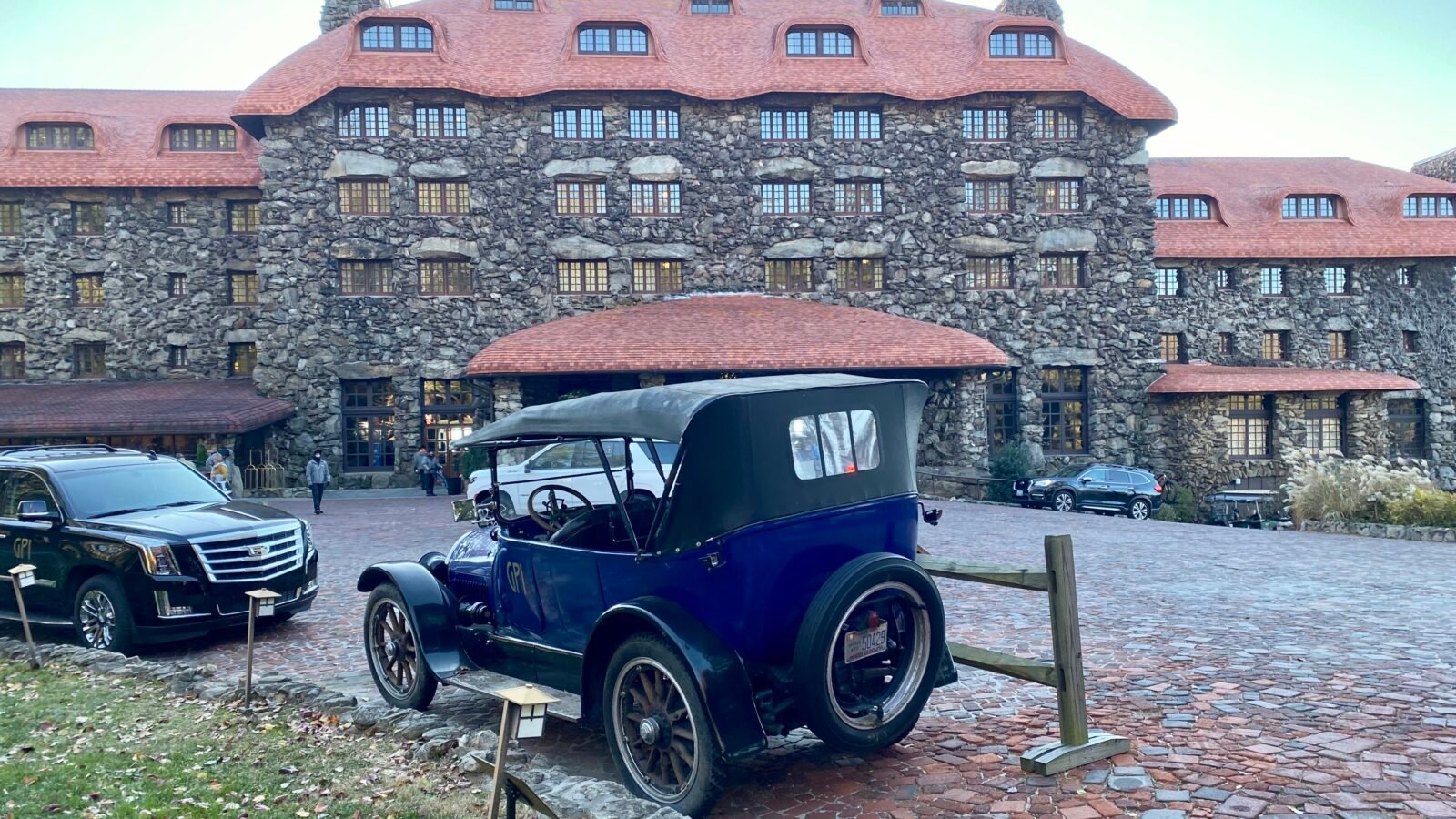
Guests who arrived at the Grove Park Inn in 1913 came up a steep mountain road to a building that looked as if it had grown out of the ridge. Its walls were rough gray granite, its roof beams were heavy timber, and its lobby held a fireplace large enough to stand in. The hotel sat on Sunset Mountain, a short climb above the city of Asheville in the Blue Ridge foothills of western North Carolina.
The man who paid for it had made his money selling a tonic. Edwin Wiley Grove had built a fortune from Grove's Tasteless Chill Tonic, a bitter-free mix of quinine and iron sold as a remedy for malaria and fever. His hotel was an attempt to turn that wealth into a resort that would draw wealthy visitors to the mountains, and to put a stone building on the map of American craft design.
A tonic fortune looks for a mountain
Grove made his money in St. Louis, where his company advertised Grove's Tasteless Chill Tonic heavily in newspapers and almanacs. The product was a patent medicine, sold without the regulation that later governed such remedies. Grove grew wealthy enough to look for a second enterprise, and he turned to the mountains of western North Carolina, where health seekers had long gone for the climate.
Asheville had a reputation as a health resort by the late nineteenth century, and several large hotels had already been built in and near the city. Grove chose a different site. He bought land on Sunset Mountain, outside the downtown core, and planned a resort that would stand apart from the town and its existing hotels.
The inn's design was closely tied to Fred Seely, Grove's son-in-law, who oversaw the project and later ran the hotel. Seely's role in the planning and management is well documented, though the precise division of design work between him and the architects involved is described differently across sources.
Granite, chestnut and a local crew
The builders relied on materials taken from the site and the region. Granite was quarried and laid by hand in the walls, giving the building its rough, massive surface. Heavy timbers, many of them chestnut, framed the roofs and interior spaces. The stonework and timber were central to the look that visitors remembered, and they were what set the hotel apart from the wood-frame and brick resorts of the period.
Construction took place over several years, with much of the labor drawn from Asheville and the surrounding county. Stonemasons and carpenters did the most visible work, and their skill is the reason the building still reads as a made object rather than a commercial box. Exact crew sizes and payroll totals vary by source, so this article does not give a figure.
The inn opened in 1913, and the building's use of local stone and wood made it an early example of what later writers would call the Rustic or Craftsman style in a resort setting.
Craft inside the walls
The interior was where the Arts and Crafts ideas were most visible. The hotel's public rooms were furnished with heavy, plain-lined wood furniture, hand-finished metalwork and lamps, and textiles chosen to match the building's rough stone. The aim, in line with the Arts and Crafts movement that had spread from Britain to the United States, was to make the building and its furnishings look honestly made by hand.
Much of that look came from the surrounding craft economy in the mountains. Western North Carolina had a long tradition of woodworking and handwork, and local craftspeople supplied the kind of finish the resort wanted. The Biltmore Industries workshops in nearby Biltmore Village, founded in the early 1900s, were part of the same regional movement.
Historians of the American Arts and Crafts movement generally place the inn among the Southern examples of the style, but the hotel's interiors were altered over the decades, and some original furnishings were replaced or removed. Anyone visiting today sees a building that has been renovated more than once.
A resort economy on the mountain
A resort on a mountain ridge depended on guests who could afford to travel, stay for weeks, and spend money on rooms, meals, and activities. The Grove Park Inn was built for that trade. Its location outside the downtown gave it privacy, and its craft décor gave it a distinct image that appealed to visitors from northern cities.
The hotel also created work. Kitchen, housekeeping, grounds, and maintenance staff were needed year-round, and Asheville's service economy grew around the resort's needs. The inn was one of several large hotels that made the city a seasonal destination, though the number of guests and the size of its staff in these early years are not reliably documented in the sources this article draws on.
Grove's death in 1927 changed the inn's ownership. Sources differ on the exact sequence of later sales, so this article does not trace them in detail.
A writer's winter and a changing mountain
The inn's reputation grew in the 1930s, when F. Scott Fitzgerald stayed there while his wife, Zelda, was being treated at a hospital in Asheville. He wrote during those stays, and the association with Fitzgerald has become one of the hotel's best-known stories.
The building's stone walls and timber roofs have survived a century of changing tastes. Its survival says as much about the Arts and Crafts ideas of the 1900s as it does about the tonic fortune that paid for it. The Grove Park Inn stands as a reminder that a patent medicine could finance a serious piece of American design.
Citation information
- Article title
- Grove Park Inn, 1913: Edwin Wiley Grove’s Stone Resort Above Asheville
- Author
- Dylan Thomas
- Website name
- North Carolina Backstory
- URL
- https://northcarolinabackstory.com/grove-park-inn-1913-edwin-wiley-groves-stone-resort-above-asheville/
- Original published date
- November 18, 2026
We strive for accuracy and fairness. If you see something that doesn’t look right, contact us.