Look Homeward, Angel: Thomas Wolfe, Asheville and the Novel the Town Never Forgave
Thomas Wolfe's 1929 novel turned his Asheville boyhood into 'Altamont,' and the town recognized itself at once. It took years for the anger to cool.
- When
- 1929
- Where
- Asheville, Buncombe County, North Carolina
In the autumn of 1929, copies of a thick new novel began circulating in Asheville, North Carolina. Readers who opened it found a mountain town called Altamont, and it did not take them long to realize they knew the place. They also knew the stonecutter on the square, the boarding-house keeper, and many of their neighbors.
The author was Thomas Wolfe, a 29-year-old Asheville native who had not intended to cause a scandal. He had intended to write down everything he remembered. The book was Look Homeward, Angel, and Asheville's reaction made Wolfe wary of home for years.
A boyhood on Spruce Street
Wolfe was born in Asheville on October 3, 1900, the youngest of eight children. His father, W. O. Wolfe, carved gravestones and monuments. His mother, Julia Westall Wolfe, was a shrewd businesswoman who invested in real estate.
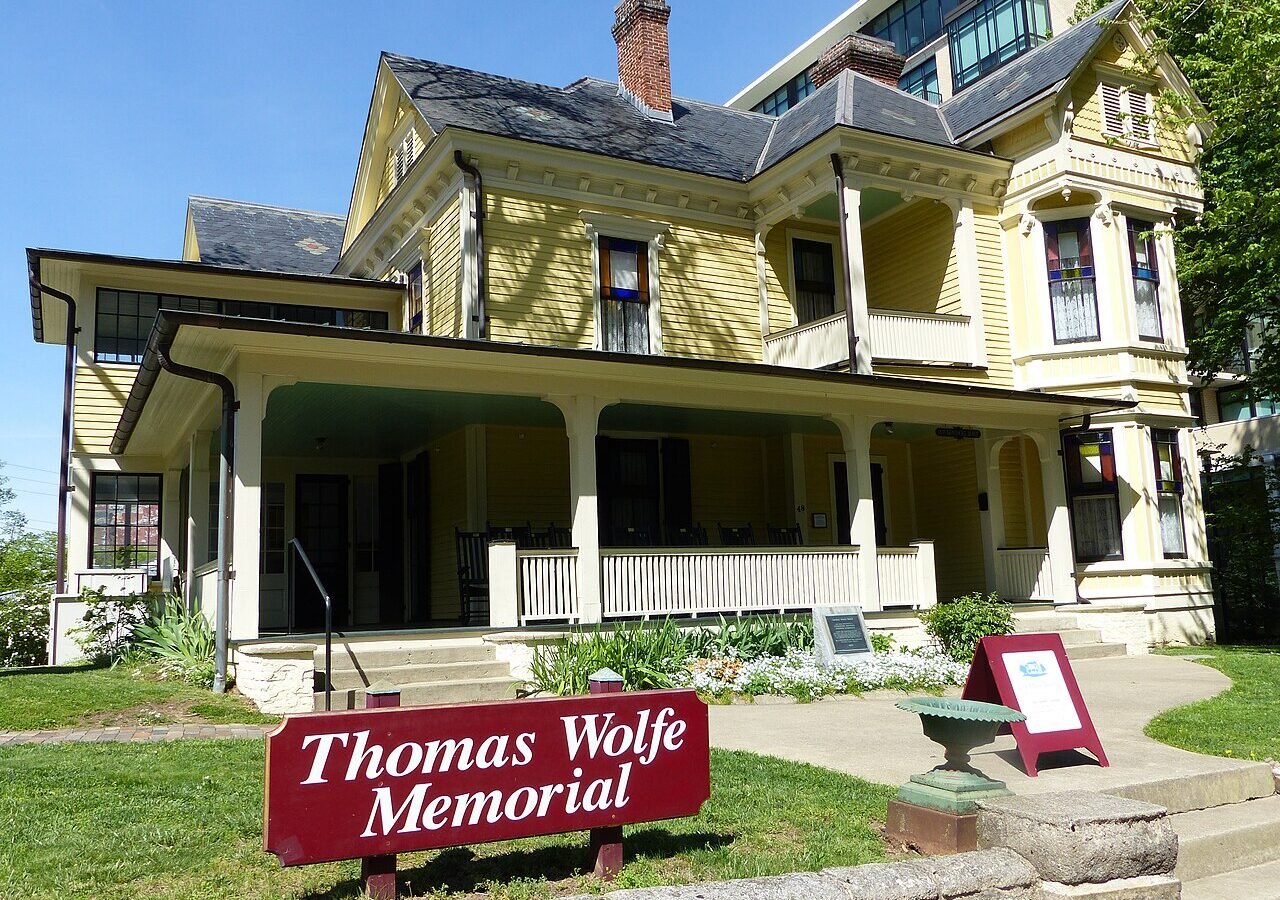
In 1906 Julia bought a boarding house at 48 Spruce Street, known as the Old Kentucky Home, and moved there with young Tom while the rest of the family stayed in the family home on Woodfin Street. The arrangement split the household and left a lasting mark on him. He later wrote about the boarding house and its changing cast of lodgers, along with his family's tensions.
Wolfe went to the University of North Carolina at Chapel Hill, then to Harvard to study playwriting. He later taught at New York University. In 1918 his brother Ben died of influenza-related pneumonia, a loss that became one of the emotional centers of the novel.
Perkins and the manuscript
After his plays failed to find producers, Wolfe turned to fiction. He wrote an enormous autobiographical manuscript, first called O Lost, partly while involved with the theatrical designer Aline Bernstein. Scribner's editor Maxwell Perkins, who already worked with F. Scott Fitzgerald and Ernest Hemingway, read it in 1928 and wanted to publish it.
The manuscript needed heavy cutting, and Perkins and Wolfe spent months working through it. Wolfe resisted many cuts, and Perkins's role in shaping the book became a lasting subject of literary debate. Historians agree that the finished novel was substantially shorter than the draft. They differ about how much credit Perkins deserves for its form.
The title came from John Milton's elegy Lycidas. Scribner's published the novel on October 18, 1929, days before the stock market crash. The hero, Eugene Gant, is a sensitive boy growing up in Altamont, and the book follows him to the edge of adulthood.
The town reads itself
Wolfe changed names but left much else recognizable. Oliver Gant, a stonecutter, closely resembled his father. Eliza Gant, a boarding-house owner who is both devoted and grasping, resembled his mother. Dixieland, the boarding house in the novel, was obviously the Old Kentucky Home.
Many Asheville residents saw their own lives and failings on the page, and they reacted badly. Wolfe later said he received hostile letters, including threats. He stayed away for years, and he did not return until 1937, when he was received more cordially.
Wolfe answered his critics in an essay and in his later fiction, defending the right of a writer to use his own experience. He continued to write about Asheville in Of Time and the River (1935), though he had left Perkins and Scribner's for Harper & Brothers by 1937. He died in Baltimore on September 15, 1938, at 37, of tuberculosis of the brain. He is buried in Asheville's Riverside Cemetery. You Can't Go Home Again, which includes a famous account of the town's reaction, appeared posthumously in 1940.
From boarding house to landmark
Julia Wolfe ran the Old Kentucky Home until her death in 1945. After that the house passed to other owners, and preservation efforts began in the years after the war. Fans of the novel came to see Dixieland, and the Thomas Wolfe Memorial Association worked to save the building.
The house is now the Thomas Wolfe Memorial, a North Carolina state historic site, and a National Historic Landmark. An arson fire in 1998 damaged the house, and it reopened to visitors after restoration in 2004. The town that once resented the book now treats the house as one of its principal cultural sites.
Wolfe's reputation has changed over time. Critics have often found his prose overwrought and his work undisciplined. Still, he is remembered as one of the major American novelists of the early twentieth century, especially for his lyrical, autobiographical writing about youth and longing. Asheville did not forgive him quickly, but it eventually claimed him.
Citation information
- Article title
- Look Homeward, Angel: Thomas Wolfe, Asheville and the Novel the Town Never Forgave
- Author
- admin
- Website name
- North Carolina Backstory
- URL
- https://northcarolinabackstory.com/look-homeward-angel-thomas-wolfe-asheville-and-the-novel-the-town-never-forgave/
- Original published date
- September 17, 2026
We strive for accuracy and fairness. If you see something that doesn’t look right, contact us.