The Halifax Resolves, April 12, 1776: North Carolina’s Early Vote for Independence
Three months before the Declaration, delegates in a small Roanoke River town told North Carolina's men in Philadelphia they could vote to break with Britain.
- When
- 1776
- Where
- Halifax, Halifax County, North Carolina
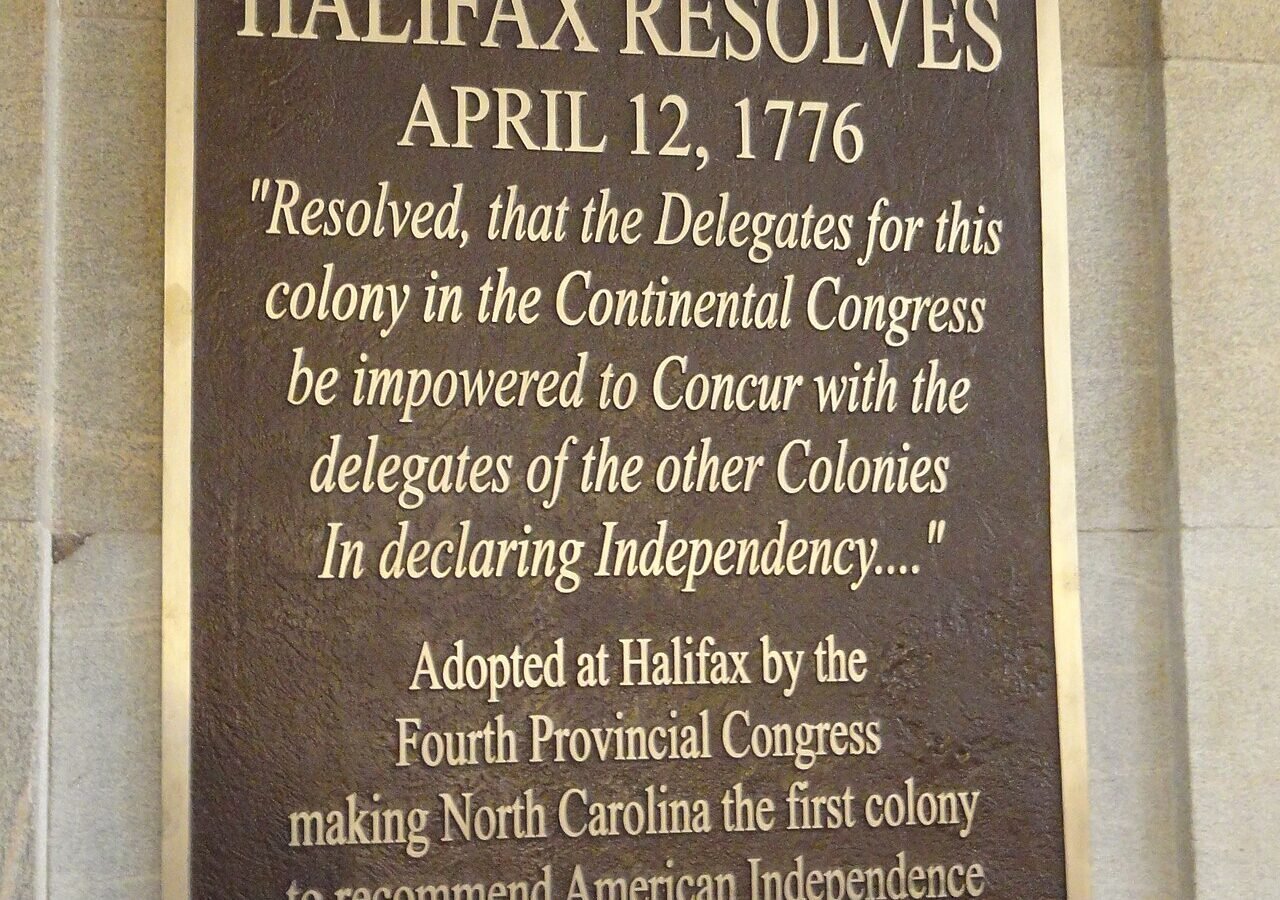
On April 12, 1776, the men of North Carolina's Fourth Provincial Congress, meeting in the river town of Halifax, took up a report from a select committee. They were not debating whether war had begun. Fighting had been under way for a year. They were deciding whether their three delegates in Philadelphia should be free to vote to leave the British Empire.
The answer was yes, and the vote was unanimous. It was a short text, and in the colonies it came earlier than anything like it.
A colony already at war
North Carolina's royal government had collapsed in 1775. Governor Josiah Martin fled the colony's capital, New Bern, that May. He later took refuge aboard a British warship in the Cape Fear River, where he tried to organize loyalist support. Provincial congresses, elected outside royal authority, took over the work of governing.
The fighting came to the colony in February 1776. On February 27, patriot militia defeated a force of loyalists, many of them Scottish Highlanders, at Moores Creek Bridge near Wilmington. The victory broke Martin's plans for the moment and raised patriot confidence. A British fleet and troops under Sir Henry Clinton were also gathering off the Cape Fear coast that spring.
Meeting at Halifax
The Fourth Provincial Congress convened at Halifax on April 4, 1776. Halifax sat on the Roanoke River in the northeastern part of the colony and was a county seat with an established patriot leadership. Abner Nash served as the congress's president.
Delegates appointed a select committee to consider the state of the colonies. Cornelius Harnett, a Cape Fear merchant and one of the most prominent patriots in the colony, is traditionally named as its chairman. On April 12 the committee reported, and the congress adopted its resolution. The result is known as the Halifax Resolves.
What the resolves said
The key resolution empowered the colony's delegates in the Continental Congress to join the delegates of other colonies in declaring independence and in forming foreign alliances. The resolves did not themselves declare independence. They gave the delegates permission to vote for it, if the Continental Congress took that step.
The text also reserved something for North Carolina. The colony kept for itself the sole and exclusive right to form its own constitution and laws. Any future general body would act only for purposes the colonies agreed on. The wording reflects a view common at the time: independence meant thirteen self-governing states acting together, not one consolidated nation.
The delegates affected were Joseph Hewes, William Hooper and John Penn. Their instructions went to Philadelphia within days or weeks. Historians have not settled exactly when each of them first acted on the instructions.
The road to July 4
Sentiment for independence had been growing since the winter. Thomas Paine's pamphlet Common Sense appeared in January 1776, and news that Britain was hiring German troops and had closed colonial trade hardened opinion. Not every colony moved at once. Several delegations were still bound by instructions that forbade a vote for separation.
Other colonies soon followed. Rhode Island's assembly renounced its allegiance to the Crown on May 4. Virginia's convention instructed its delegates on May 15 to propose independence, and on June 7 Richard Henry Lee introduced that resolution in Congress. Which colony was first depends on how one defines the act. North Carolina's claim rests on being the first to formally authorize its delegates to vote for independence in Congress.
Congress voted for independence on July 2 and adopted the Declaration of Independence on July 4, 1776. Hewes, Hooper and Penn signed it for North Carolina. By late 1776 the state had its own constitution, written by another congress that met at Halifax and adopted on December 18.
Memory and a rival date
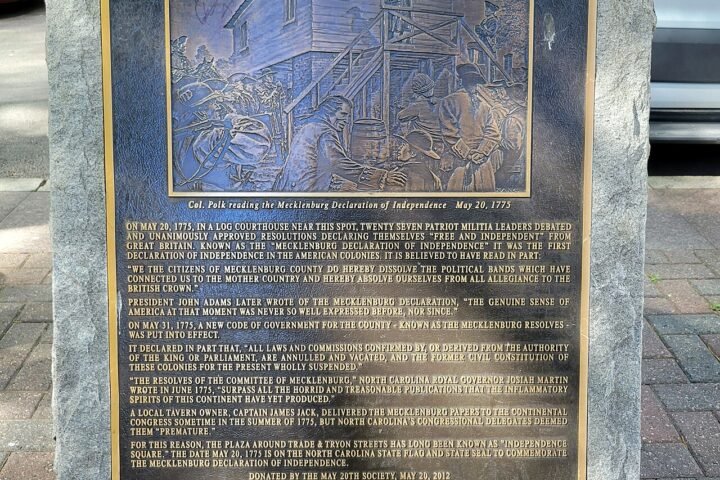
North Carolinians have long commemorated the resolves. The date April 12, 1776 appears on the state flag, together with May 20, 1775. The earlier date refers to the Mecklenburg Declaration of Independence, said to have been adopted in Charlotte. No contemporary record of it survives, and historians have long doubted that it happened as later told. The Halifax Resolves, in contrast, are documented in the official journals of the congress.
Their importance is practical rather than rhetorical. They showed that a colony, through its own elected body, would back separation, and they helped create the momentum that made a vote in Philadelphia possible that summer.
Citation information
- Article title
- The Halifax Resolves, April 12, 1776: North Carolina’s Early Vote for Independence
- Author
- admin
- Website name
- North Carolina Backstory
- URL
- https://northcarolinabackstory.com/the-halifax-resolves-april-12-1776-north-carolinas-early-vote-for-independence/
- Original published date
- June 2, 2026
We strive for accuracy and fairness. If you see something that doesn’t look right, contact us.