The Tuscarora War, 1711–1713: The Conflict That Reshaped Colonial Carolina
In September 1711, Tuscarora and allied warriors struck settlements across North Carolina at once. The war that followed ended with a fallen fort and a nation's exile.
- When
- 1711
- Where
- Craven County, North Carolina
On September 22, 1711, farm families along the Neuse and Pamlico rivers in northeastern Carolina were attacked by neighbors they knew by sight. Warriors from the Tuscarora and several smaller allied nations struck many isolated homesteads in a single, coordinated blow. Within a short time, roughly 130 colonists were dead, and the survivors fled toward whatever fortified houses they could reach.
The attack was planned, and it was a response to years of pressure. It opened a war that would end with one of the largest Native losses in colonial Carolina, and with the Tuscarora leaving their homeland for good.
A colony pressing on its neighbors
The Tuscarora were an Iroquoian-speaking people whose towns lay in the coastal plain between the Roanoke and Neuse rivers. They were not politically unified. Historians usually describe a northern group and a southern group, with leaders making decisions for their own towns.
By 1711 their position was precarious. English settlement was spreading up the rivers, and traders were cheating Native customers. Enslavement raids also targeted Native people, and the Tuscarora feared for their own communities. The surveyor John Lawson, whose 1709 book A New Voyage to Carolina described these abuses, had warned that Native people were being wronged.
In 1710 the Swiss promoter Christoph von Graffenried founded New Bern, settling Swiss and German Palatine colonists at the meeting of the Neuse and Trent rivers. Tuscarora leaders saw the settlement as a further seizure of their land. The colony's own government was also in disarray after the Cary Rebellion, a political fight that left North Carolina poorly prepared for a war.
The attacks of September 1711
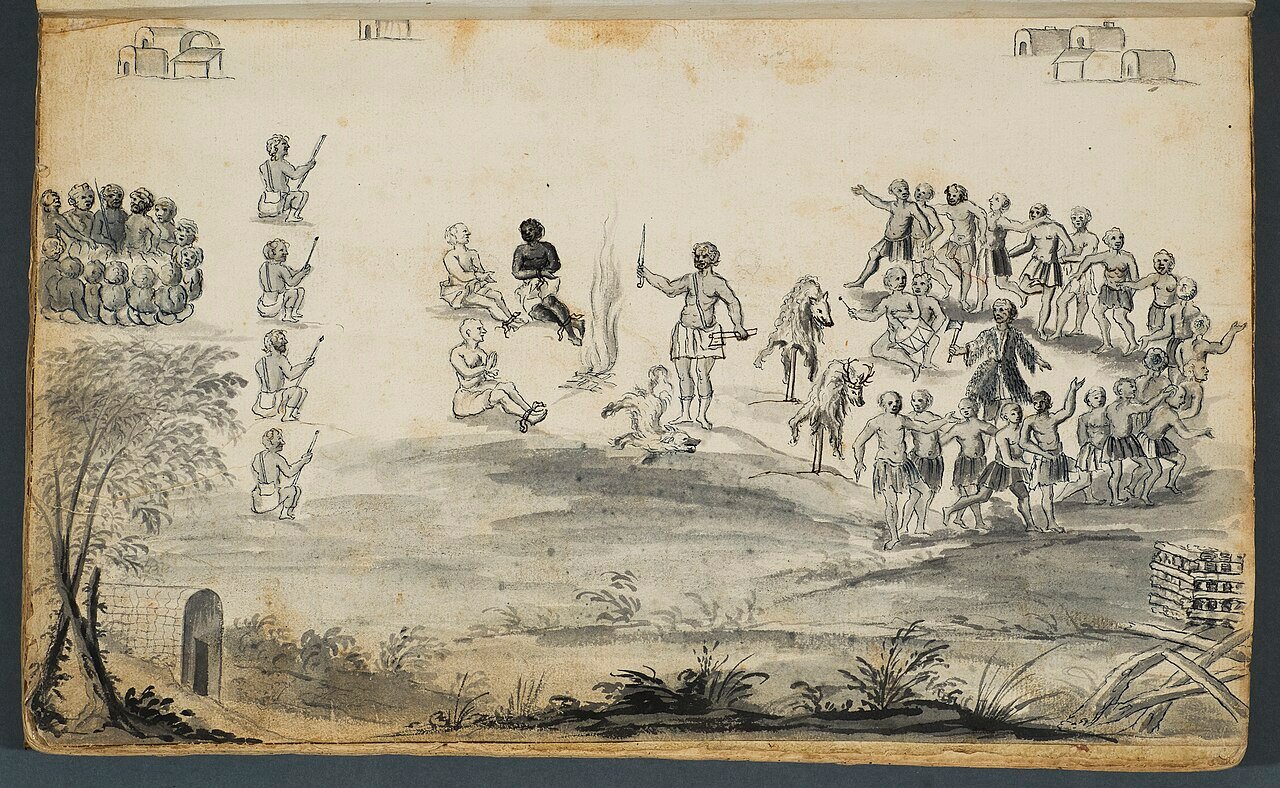
Shortly before the assault, Lawson and Graffenried were captured while traveling up the Neuse. Graffenried was eventually released after negotiating. Lawson was put to death. Accounts of how he died differ, and the popular story that he was stuck with pitch-pine splinters and set alight rests on legend more than on firm evidence.
The September 22 attacks fell on settlements along the Roanoke, Neuse, Trent and Pamlico rivers. The Tuscarora were joined by neighbors such as the Coree and Pamlico, and the war was not fought by the Tuscarora alone. Colonial reports give about 130 settlers killed, though figures vary, and many more were left homeless.
Not all Tuscarora joined the fighting. Tom Blunt, a leader of the northern towns, sided with the English. Hancock, who led the town of Catechna and is often described as a principal war leader, took the opposite course.
Carolina calls for help
North Carolina could not defend itself, so it appealed to South Carolina. In early 1712 Colonel John Barnwell marched north with a small number of white militia and several hundred Native allies, among them Yamasee and others. He took the Tuscarora town of Narhantes and besieged Hancock's fort at Catechna, then agreed to a truce.
The truce did not last. Barnwell's forces seized and enslaved Tuscarora people under circumstances that angered even many colonists, and fighting resumed. Barnwell was wounded and eventually left the colony.
A second South Carolina force arrived in early 1713 under Colonel James Moore Jr. It included a few dozen white colonists and, by most accounts, close to 900 Native allies, including Yamasee and Cherokee. Many of these men were motivated by the chance to take captives, whom Carolina merchants would sell as slaves.
The fall of Neoheroka and a long journey north
Moore's army besieged Fort Neoheroka, a fortified Tuscarora town near present-day Snow Hill in Greene County. The siege began in late January 1713, and the fort fell around March 20–23. Fire and close fighting destroyed much of the town. Moore's own reckoning suggests that about 950 Tuscarora were killed or captured, and many hundreds of the captives were sold into slavery. Exact numbers remain debated.
Resistance among the southern Tuscarora collapsed. Many survivors moved north over the following years, seeking shelter with the Iroquois Confederacy, the Five Nations of present-day New York, with whom the Tuscarora shared language and distant kinship. By about 1722 they were accepted as the Sixth Nation. Tom Blunt and his followers remained in North Carolina under a treaty in 1715, which many sources use as the formal end of the conflict, and they received land on the Roanoke River.
The war transformed the colony. Native power in the coastal plain was broken, which opened the land to settlers. It also showed how a colony could use Native allies and the slave trade as instruments of war. Those same tensions helped bring on the Yamasee War in South Carolina in 1715, in which many of Carolina's former allies turned against it.
Citation information
- Article title
- The Tuscarora War, 1711–1713: The Conflict That Reshaped Colonial Carolina
- Author
- admin
- Website name
- North Carolina Backstory
- URL
- https://northcarolinabackstory.com/the-tuscarora-war-1711-1713-the-conflict-that-reshaped-colonial-carolina/
- Original published date
- May 24, 2026
We strive for accuracy and fairness. If you see something that doesn’t look right, contact us.