The Lost Colony of Roanoke: What We Know About the 1587 Settlers
In 1590 John White came back to Roanoke Island and found empty houses and a single word carved on a post. Here is what is documented, and what is not.
- When
- 1587
- Where
- Roanoke Island, Dare County, North Carolina
On August 18, 1590, John White stepped ashore on Roanoke Island looking for his daughter, his son-in-law and his granddaughter. He had last seen them three years earlier. The settlement was empty, the houses were gone, and the palisade was still standing. On one of its posts, in capital letters, someone had carved CROATOAN.
White had left about 115 English men, women and children on the island in 1587. He had been away for three years because of war with Spain and a shortage of ships. What he found when he got back is the one firm piece of evidence we have about what became of them, and nearly everything else is inference.
Why the English were on Roanoke
In 1584 Queen Elizabeth I granted Walter Raleigh a charter to settle lands in North America. That summer, two of his captains, Philip Amadas and Arthur Barlowe, explored the Outer Banks. They returned to England with two Native men, Manteo and Wanchese.
A first colony, a military outpost under Ralph Lane, arrived on Roanoke Island in 1585. It struggled with food shortages and worsening relations with the local Algonquian peoples. The survivors left in 1586 aboard Francis Drake's ships. The scientist Thomas Harriot and the artist John White were both part of that expedition, and their drawings and descriptions are the best early record of the region.
The 1587 colony and Virginia Dare
The second group was meant to be different. It included families and was intended to settle on Chesapeake Bay, with John White as governor. The ship's pilot, Simon Fernandes, instead put the colonists ashore at Roanoke in July 1587. Historians still discuss whether this was a deliberate choice or a matter of timing and the season.
White's account records the early events. One colonist, George Howe, was killed by Native men while he was alone gathering crabs. Manteo was baptized on August 13 and named by the English as Lord of Roanoke. On August 18, White's daughter Eleanor, wife of Ananias Dare, gave birth to a girl who was baptized Virginia. She was the first child born to English parents in what is now the United States.
The colonists asked White to return to England to arrange supplies. He sailed in late August, leaving his daughter and granddaughter behind. Before he left, the two sides agreed that if the colonists moved, they would carve the name of their destination, and add a cross if they were in distress.
What John White found in 1590
The Spanish Armada crisis of 1588 kept English ships at home, and White did not reach Roanoke until 1590. He found the word CROATOAN on a post, and the letters CRO on a tree. There was no cross.
Croatoan was the name of an island to the south, now part of Hatteras Island, and of the Native people who lived there. Manteo came from that community. White also found that some of his own chests had been dug up and their contents scattered. He wanted to sail to Croatoan, but a storm damaged the ships and they were short of supplies. The captains turned back toward England, and White never saw his family again.
The message did not say that anyone was in danger, and it suggests that the colonists moved on purpose. That is as far as the document takes us. Whether they stayed at Croatoan, moved further inland, or did something else is not recorded.
Legend, archaeology and open questions
Many popular stories go beyond the evidence. The tale of Virginia Dare turning into a white doe is a 19th-century invention, popularized in North Carolina literature. In 1937 a stone carved with messages from Eleanor Dare surfaced, and more followed. They were eventually judged to be forgeries.
Some theories have better support. Tree rings analyzed by climate researchers and published in 1998 show that 1587 to 1589 was one of the driest periods in 800 years. That would have made it harder for the colonists and their Native neighbors to get food. In later years, English writers at Jamestown reported stories of survivors living among Native people, but those reports are secondhand and historians disagree about how much to trust them. Some Native groups in the region, including the Lumbee, have oral traditions linking their ancestors to the colonists, but historians have not been able to prove or disprove this.
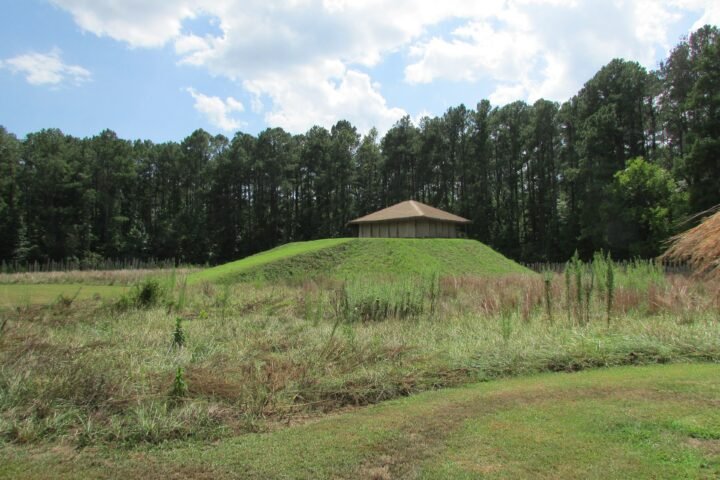
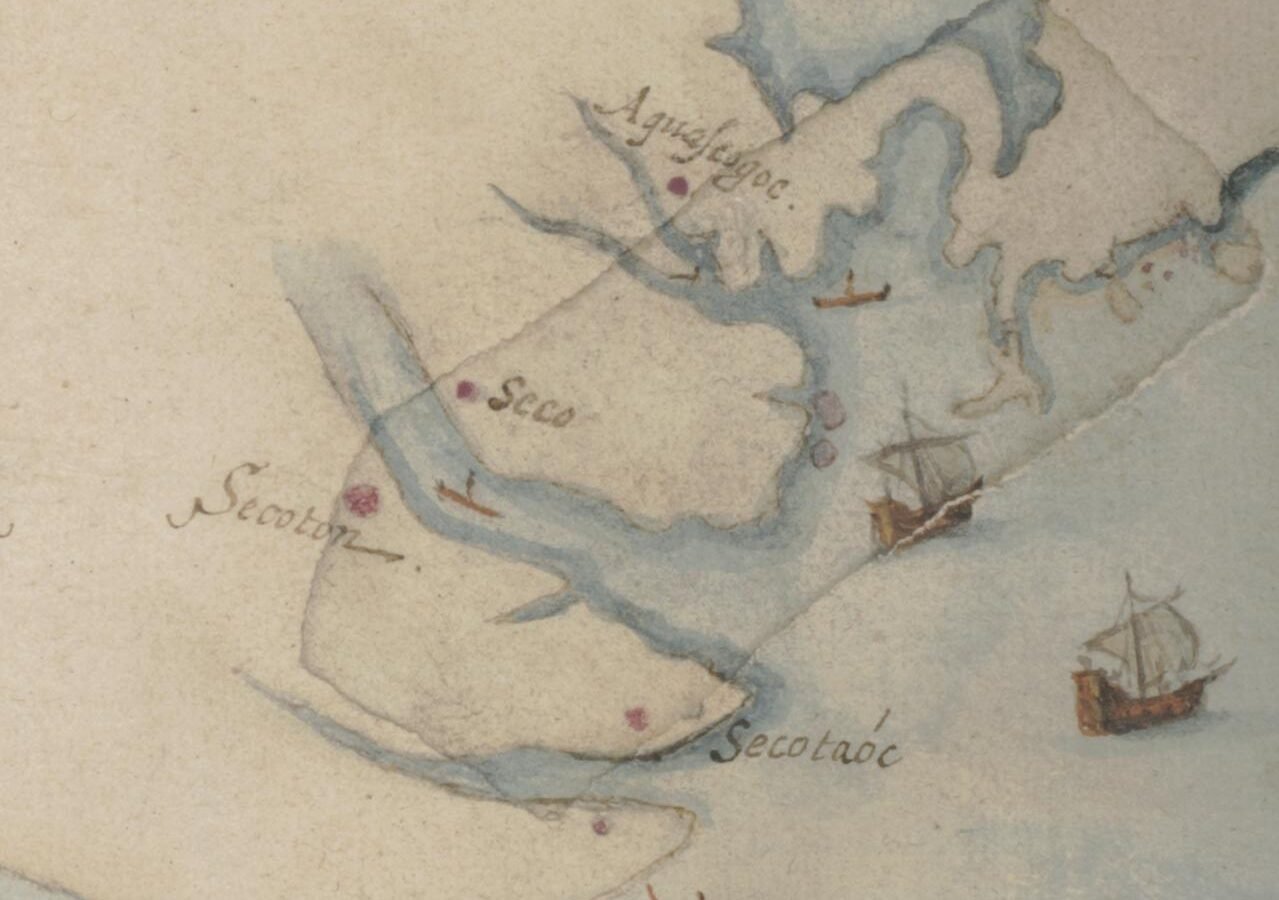
Archaeology has confirmed Fort Raleigh, the 1585 settlement site, which is now a national historic site on Roanoke Island. It has not found a definitive 1587 settlement or any burial. In recent years the First Colony Foundation has found English-made objects of the right period at sites on the Outer Banks, notably near Cape Creek on Hatteras Island, and further inland. Researchers call these finds suggestive. A fragment of a 16th-century map by White, which was examined in 2012, reveals a hidden symbol that may mark a fort. Still, nothing has provided clear proof of where the colonists went.
Citation information
- Article title
- The Lost Colony of Roanoke: What We Know About the 1587 Settlers
- Author
- admin
- Website name
- North Carolina Backstory
- URL
- https://northcarolinabackstory.com/the-lost-colony-of-roanoke-what-we-know-about-the-1587-settlers/
- Original published date
- March 11, 2026
We strive for accuracy and fairness. If you see something that doesn’t look right, contact us.