The Devil’s Tramping Ground: A Chatham County Legend and the Search for a Cause
A bare circle in a Chatham County field has drawn devil stories, burial theories and soil tests for more than a century. Here is what the record actually shows.
- When
- 1882
- Where
- Harper's Crossroads, Chatham County, N.C.
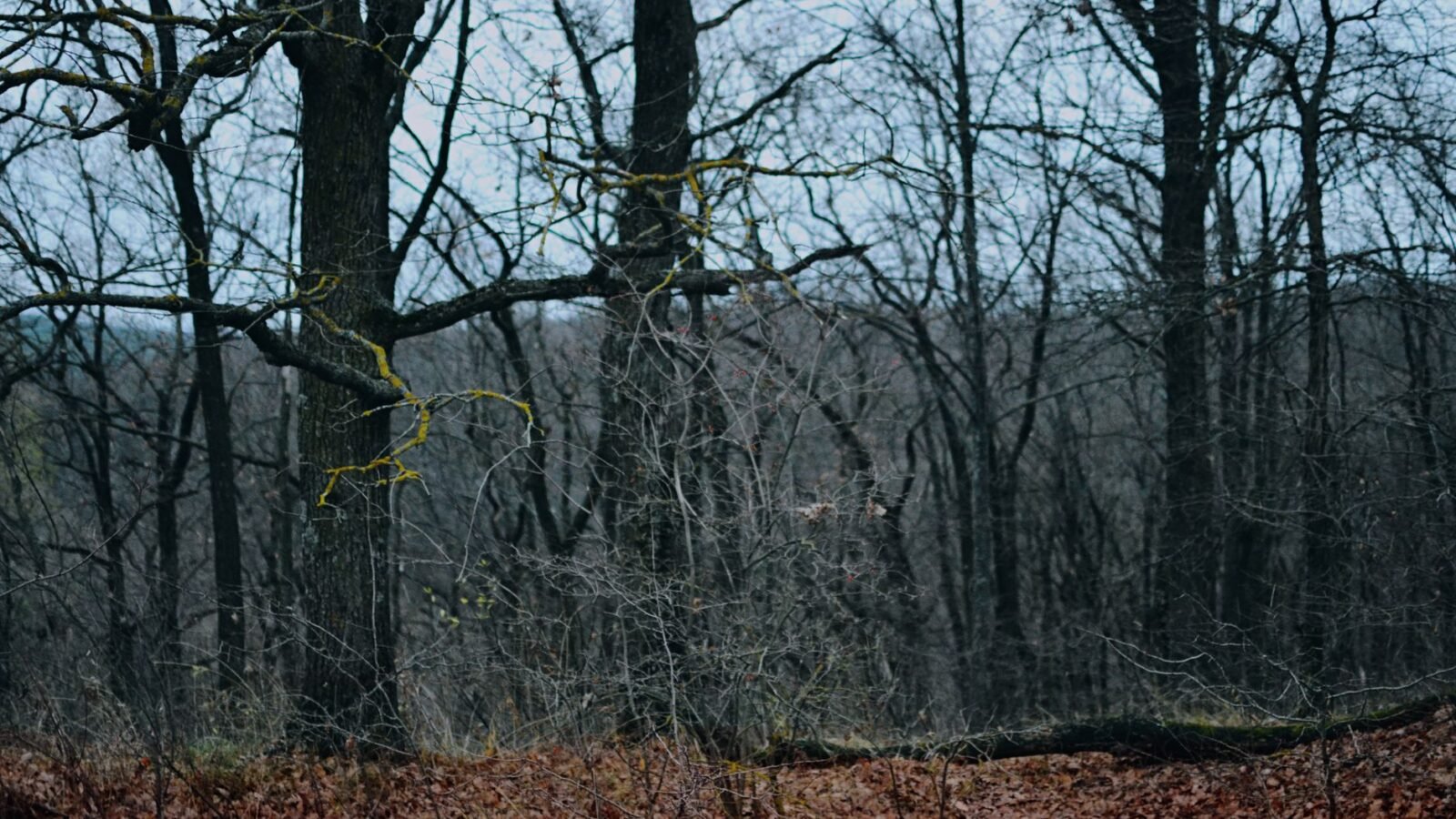
Walk into the pine woods near Harper's Crossroads, in western Chatham County about ten miles south of Siler City, and you will come to a ring of ground where little grows. The bare circle is roughly 40 feet across, and its edge is sharply defined. Inside, a wiry grass grows, but the path itself is bare. Around it, grass, weeds and trees grow as they do everywhere else in the woods.
Local people have called it the Devil's Tramping Ground for generations. The name comes from a simple story: the devil walks around and around the spot at night, wearing the earth bare with his feet. The story is folklore, not a finding. But the circle itself is real, and it has been drawing visitors, explanations and arguments since at least 1882.
The first printed description
The earliest record of the circle that I could verify is an 1882 printed account, reported as the oldest known mention of the spot. Unlike the modern legend, it described the ground inside as covered with a thick growth of long wire-grass rather than bare. That detail is the anchor for everything written since, and the first thing a careful reader should separate out from the later stories.
The spot sits about ten miles south of Siler City, in a swath of forest surrounded by farm fields. In the 1880s the area's rural setting is not documented in the sources I checked, so I make no claim about it here. The setting is part of why the spot has been talked about in the surrounding country for so long.
The devil and the Native explanations
The devil explanation is the most widely repeated. It turns a physical oddity into a moral one: the ground is bare because something unnatural walks there, and the walking is never finished. It is a satisfying story, and it explains the circle without needing soil science at all.
A second explanation holds that the circle was an Indigenous meeting place, where people gathered and made the bare ground through ceremonial dances. A related tale, tied to the Croatan story, says a fallen chief was buried there after a battle. These ideas appear in local tradition and in later retellings. I could not find a published excavation that confirms burials at the site, so the burial claim rests on tradition, not on evidence. It should be treated as an unproven idea, not a settled one.
What the soil tests were meant to show
Once the circle was seen as a land problem rather than a supernatural one, farmers and officials wanted to know why the ground would not support plants. Soil samples were taken, and the state agriculture office was among the bodies that looked at them. The purpose was practical: to find out whether the soil was too salty, too acidic, too poor in nutrients, or compacted in a way that kept seed from taking root.
The sources I checked report results only in broad terms, so this article does not quote figures. A 1946 test, reported in the Raleigh News and Observer, found the soil acidic and sterile. Other accounts describe high salt content from state agriculture testing. A later re-test by a retired soil scientist found no copper and a pH only slightly below the usual range, with some elements higher inside the circle, which he linked to campfire ash. A test that finds a problem with the soil explains why plants fail, but it does not explain why the bare area stays a clean circle, and that gap is where the legend has kept its footing.
Why the mystery persists
Several natural explanations are commonly offered for barren patches of this kind: mineral or chemical imbalances in the topsoil, compaction from repeated foot traffic or livestock, or substances that stop plants from growing. Each can produce a bare spot. None, so far as the published record I could check shows, has been tested to the point of settling this particular circle's shape and size.
That is the honest position. The devil story is a legend, and the burial theory is a tradition without documented excavation behind it. The soil questions are real and were investigated, but the record does not give a single cause that every source accepts. The circle remains what it was in 1882: a bare patch of ground that people have never fully agreed how to explain.
Citation information
- Article title
- The Devil’s Tramping Ground: A Chatham County Legend and the Search for a Cause
- Author
- John. H.
- Website name
- North Carolina Backstory
- URL
- https://northcarolinabackstory.com/the-devils-tramping-ground-a-chatham-county-legend-and-the-search-for-a-cause/
- Original published date
- November 18, 2026
We strive for accuracy and fairness. If you see something that doesn’t look right, contact us.