Cameron Village Opens in Raleigh, 1949: The Southeast’s Early Shopping Center Built for the Car
Raleigh's Cameron Village opened in 1949 with its shops set around parking lots. Its 2021 renaming reopened debate over the enslaver whose family name it carried.
- When
- 1949
- Where
- Raleigh, Wake County, North Carolina
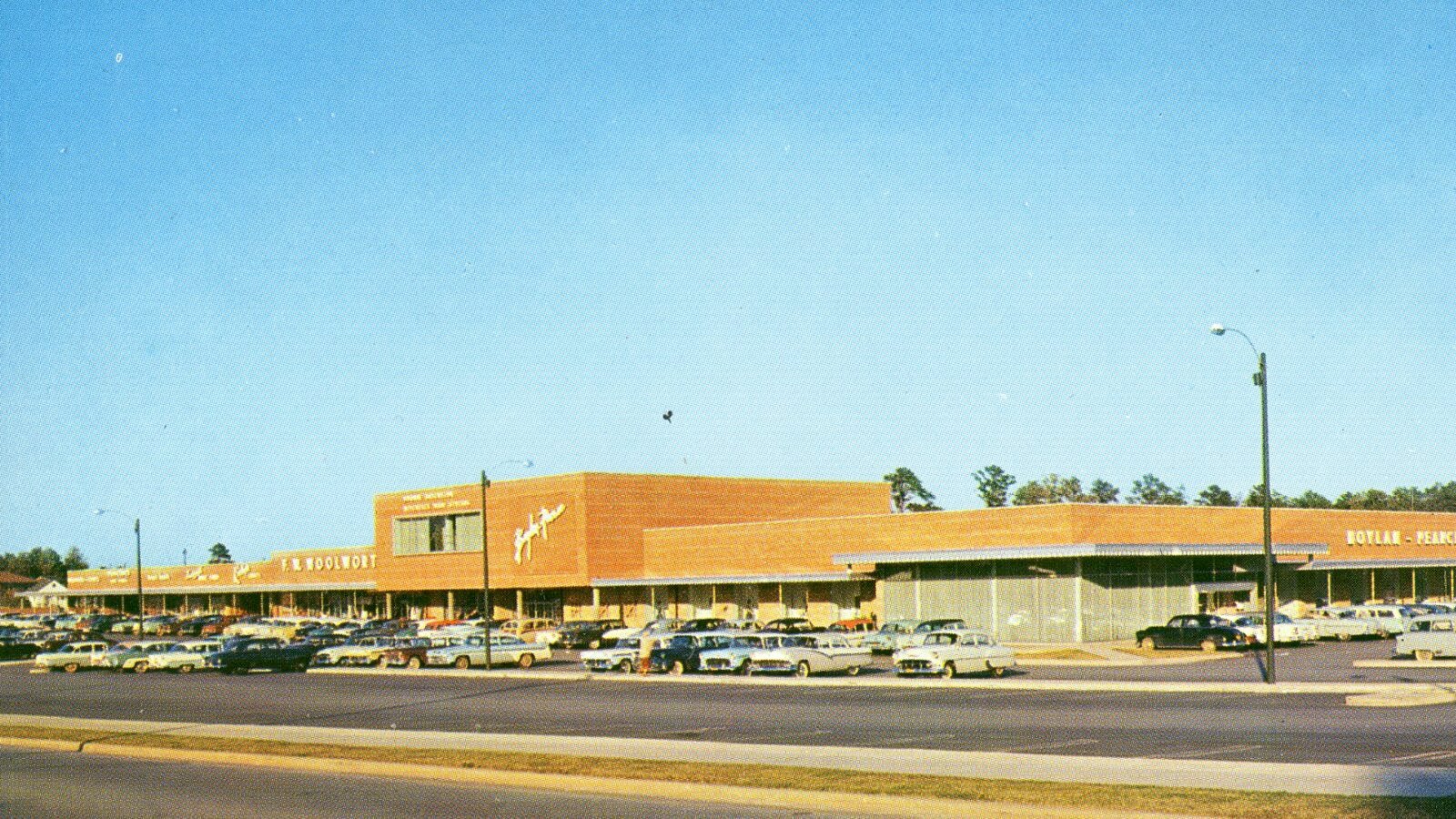
On November 17, 1949, Raleigh shoppers could park near the store they wanted and walk straight in. The stores were part of Cameron Village, a new retail center on the western edge of the city that was built with the automobile in mind from the start.
Cameron Village was not the first place to sell goods to motorists, and Raleigh had plenty of shops along its older streets. What made it notable was its plan. Its builders treated the car as the main way customers would arrive, and they arranged the buildings to suit that habit.
Farmland on the edge of town
In the late 1940s, downtown Raleigh was still the center of the city's shopping, banking and government life. Most retail was concentrated in the blocks near the state capitol and along streets that had been laid out long before cars were common.
The land that became Cameron Village lay about two miles west of downtown. The development, as it was planned, covered 158 acres.
The land had a long family history. Its name came from Duncan Cameron, the antebellum owner of the land, whose plantations in the region were worked by enslaved people.
Two developers and a land purchase
J.W. York and R.A. Bryan bought the land in 1947 and planned a residential subdivision with shopping services, apartments and single-family houses.
The purchase came as Raleigh was expanding rapidly westward after World War II. The shopping center later profited from that growth.
Their plan was to build a group of stores in a single coordinated project, laid out as a six-block grid with ample parking, instead of a row of separate buildings. It was Raleigh's first shopping center away from downtown.
Designed for the parking lot
The center's layout gave ample parking a central place in the plan. Customers could drive to the shops and avoid the parking shortages that frustrated people on the crowded downtown streets.
The shops were grouped in blocks, which made the center easy to reach by car. The arrangement was copied by developers who built shopping centers near residential areas during the 1950s and 1960s.
Cameron Village drew customers who might once have gone downtown for a day's errands. Downtown merchants had to compete with a center that offered convenient parking and a single trip for several purchases.
A name tied to slavery
For decades the center carried the Cameron name. Duncan Cameron, the antebellum owner of the land, was an enslaver; sources differ on how many people he held, with some saying hundreds and others more than 1,000.
In 2021, the center's owners changed the name to Village District. The change put the site's history back in public view and turned the shopping center into a case study in how postwar commercial places carry the names of earlier owners.
The owner, Regency Centers, said it made the decision after learning about the name's ties to slavery. Sabrina Goode, executive director of Friends of Oberlin Village, welcomed the change and said she hoped it would better reflect the area's history.
Why the site still matters
Cameron Village is a useful lens on North Carolina's postwar growth. It shows how capital, car ownership and new road networks reshaped the state's cities after World War II, and how these changes often pulled business away from older downtowns.
The site also shows how a place's history can be layered. A building from 1949 can stand for modern retail, for the financing of a postwar boom, and for an enslaving family whose name was given to the land long before the shops were built.
A fuller history of the center, including its tenants, its later expansions and how the owners and the community weighed the 2021 change, would add important detail to this story.
Citation information
- Article title
- Cameron Village Opens in Raleigh, 1949: The Southeast’s Early Shopping Center Built for the Car
- Author
- Samantha Brown
- Website name
- North Carolina Backstory
- URL
- https://northcarolinabackstory.com/cameron-village-opens-in-raleigh-1949-the-southeasts-early-shopping-center-built-for-the-car/
- Original published date
- November 18, 2026
We strive for accuracy and fairness. If you see something that doesn’t look right, contact us.