November 18, 1781: British Troops Leave Wilmington and the Cape Fear
On November 18, 1781, Maj. James Craig's garrison left Wilmington, ending a British occupation that had kept one of North Carolina's leading ports in British hands during the southern war.
- When
- 1781
- Where
- Wilmington, New Hanover County, North Carolina
On November 18, 1781, the British garrison at Wilmington, North Carolina, began to withdraw from the town. About a month earlier, Lord Cornwallis had surrendered his army at Yorktown, Virginia, and the king's forces in the South were pulling back to the few places they still meant to hold.
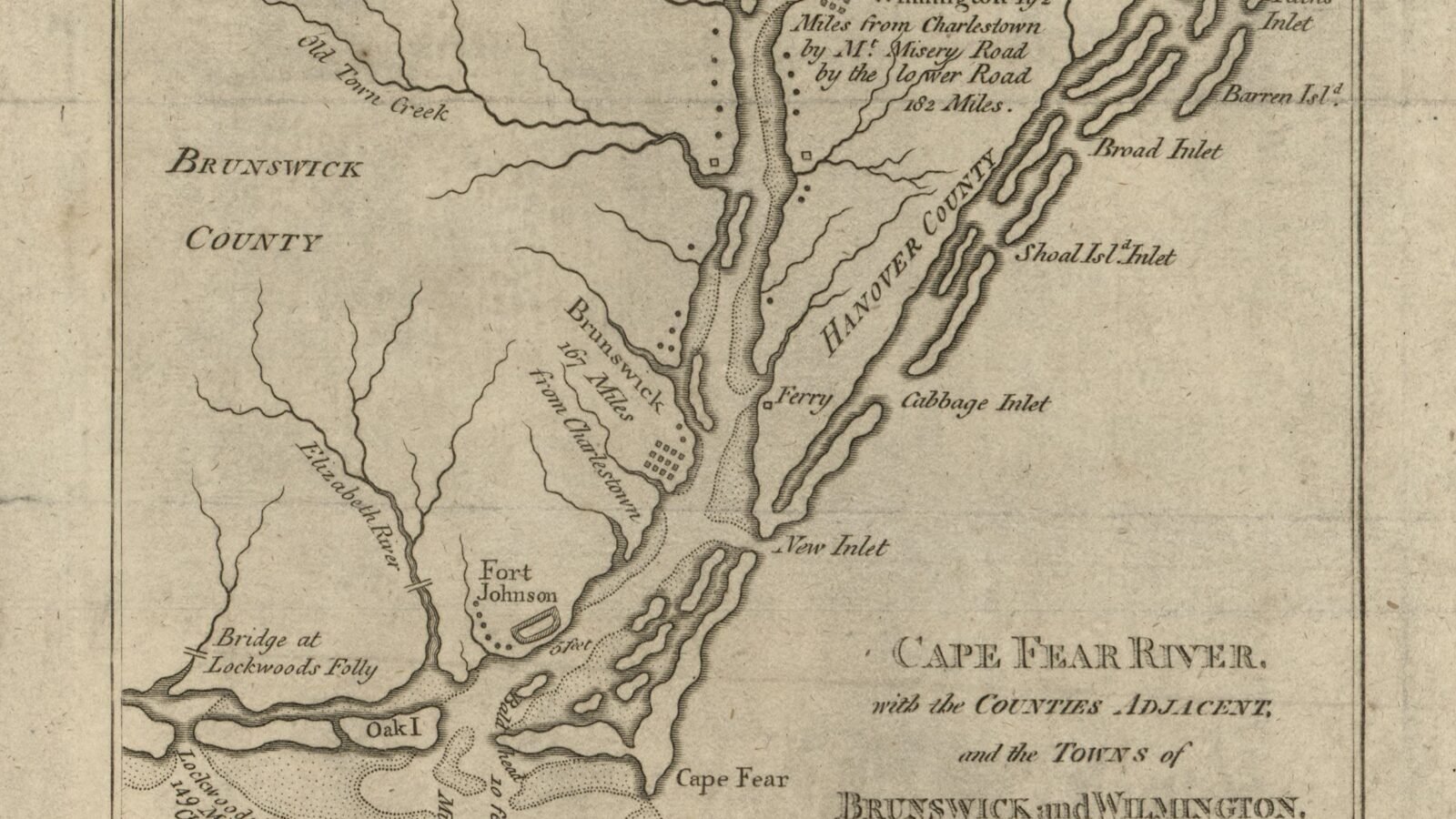
Wilmington sat on the Cape Fear River, roughly 20 to 30 miles from the Atlantic depending on how the distance is measured. It was one of the colony's leading ports and its main outlet for exports such as naval stores and lumber, with rice also shipped. Control of the river meant control of the trade, and for most of the war that made the town a prize for both sides.
A port on the Cape Fear
Patriot and Loyalist tensions in the Cape Fear region ran high well before the war turned into open fighting. In February 1776, a force of Highland Scots Loyalists under Gen. Donald MacDonald marched toward the coast to join the royal governor's plans; when MacDonald fell ill, Lt. Col. Donald McLeod led the men, who were defeated at Moores Creek Bridge on February 27 by Patriot militia under Richard Caswell and Alexander Lillington. The defeat ended organized Loyalist activity in the area for several years and left the Patriots in firm control of the lower Cape Fear.
For the next several years, Wilmington was a Patriot town. Loyalist sympathizers remained in the surrounding countryside, and the coast saw British naval activity, including a brief blockade by a British fleet. No major British army came up the river until 1781.
The British post
In the spring of 1781, the war in North Carolina shifted. Cornwallis moved his army southeast after the costly battle at Guilford Courthouse in March and reached Wilmington in April 1781. He stayed only a few weeks, resting and gathering supplies, before marching north toward Virginia.
Maj. James Craig remained behind with a garrison to hold the town. Craig's troops were far from any other British post, and the country around them was hostile. Little support came from local Loyalists, and the garrison also had to watch for Patriot militia that gathered in the back country and threatened supply lines. Holding Wilmington meant holding the river, and that required men the British could not easily spare.
Yorktown changes the plan
The surrender at Yorktown on October 19, 1781, left the main British army in the South confined to Charleston, South Carolina, and Savannah, Georgia. With no prospect of reinforcement, Wilmington was no longer a position the British could hold.
British Maj. Gen. Alexander Leslie ordered Craig to give up Wilmington and evacuate by sea to Charleston. The evacuation began on November 18, when the garrison marched down to the transport ships and sailed. Sources differ on the exact number of troops and civilians who sailed, so the figure is best left as an estimate rather than a precise count.
What the departure meant for the town
For Wilmington's Patriots, the British withdrawal was a relief, but it did not end the danger at once. Craig's August 1781 raid had destroyed ships' rigging and cargoes along the waterfront, and the town had lived under military rule for much of the year. The Patriot militia and civil officials returned to a community that had been divided.
Loyalists who had openly sided with the crown had the most to lose. Craig evacuated those who wished to leave with the British, and many of the Loyalists who remained lost their property, with not a few executed. The records that survive do not allow a precise count of who went and who stayed.
The town's wider war was not over. British forces still held Charleston and Savannah, and the fighting in the South continued into 1782. The Treaty of Paris, signed on September 3, 1783, formally ended the war, and by then Wilmington had returned to Patriot control and to its long work of rebuilding trade on the river.
Citation information
- Article title
- November 18, 1781: British Troops Leave Wilmington and the Cape Fear
- Author
- Samantha Brown
- Website name
- North Carolina Backstory
- URL
- https://northcarolinabackstory.com/november-18-1781-british-troops-leave-wilmington-and-the-cape-fear/
- Original published date
- November 18, 2026
We strive for accuracy and fairness. If you see something that doesn’t look right, contact us.