Woodrow Wilson’s Wilmington Years: A Future President’s Student Days on the Cape Fear
Summary: From late 1874, a teenage Tommy Wilson lived in Wilmington, North Carolina, a Reconstruction-era port where his father became pastor of a Presbyterian church until 1885.
- When
- 1874
- Where
- Wilmington, New Hanover County, N.C.
In late 1874, a teenage named Thomas Woodrow Wilson arrived in Wilmington, North Carolina, a busy port on the Cape Fear River. He had spent most of his childhood in Virginia, Georgia and South Carolina, and the move put him in a very different South, one still working out what Emancipation and defeat in the Civil War would mean.
The Wilsons stayed in Wilmington while his father led the church until 1885. The boy who went on to Princeton, the governorship of New Jersey and the presidency was, in those years, mostly a student and a son in a minister's household. Wilmington did not make him a future president, but it shaped the family, the schooling and the habits of mind he carried north.
A river town in Reconstruction
Wilmington was North Carolina's largest city in 1860 and remained its most populous city in the 1890s. It was a busy commercial port on the Cape Fear River, with heavy ship traffic.
By the 1890s Wilmington had a Black majority, and Black residents took part in its public life, including in the city's biracial government.
The Wilson family arrived as newcomers to this world. Joseph Ruggles Wilson, a Presbyterian minister, had previously served churches in Augusta, Georgia, and taught at a seminary in Columbia, South Carolina. He took the pulpit in Wilmington in 1874.
A minister's household
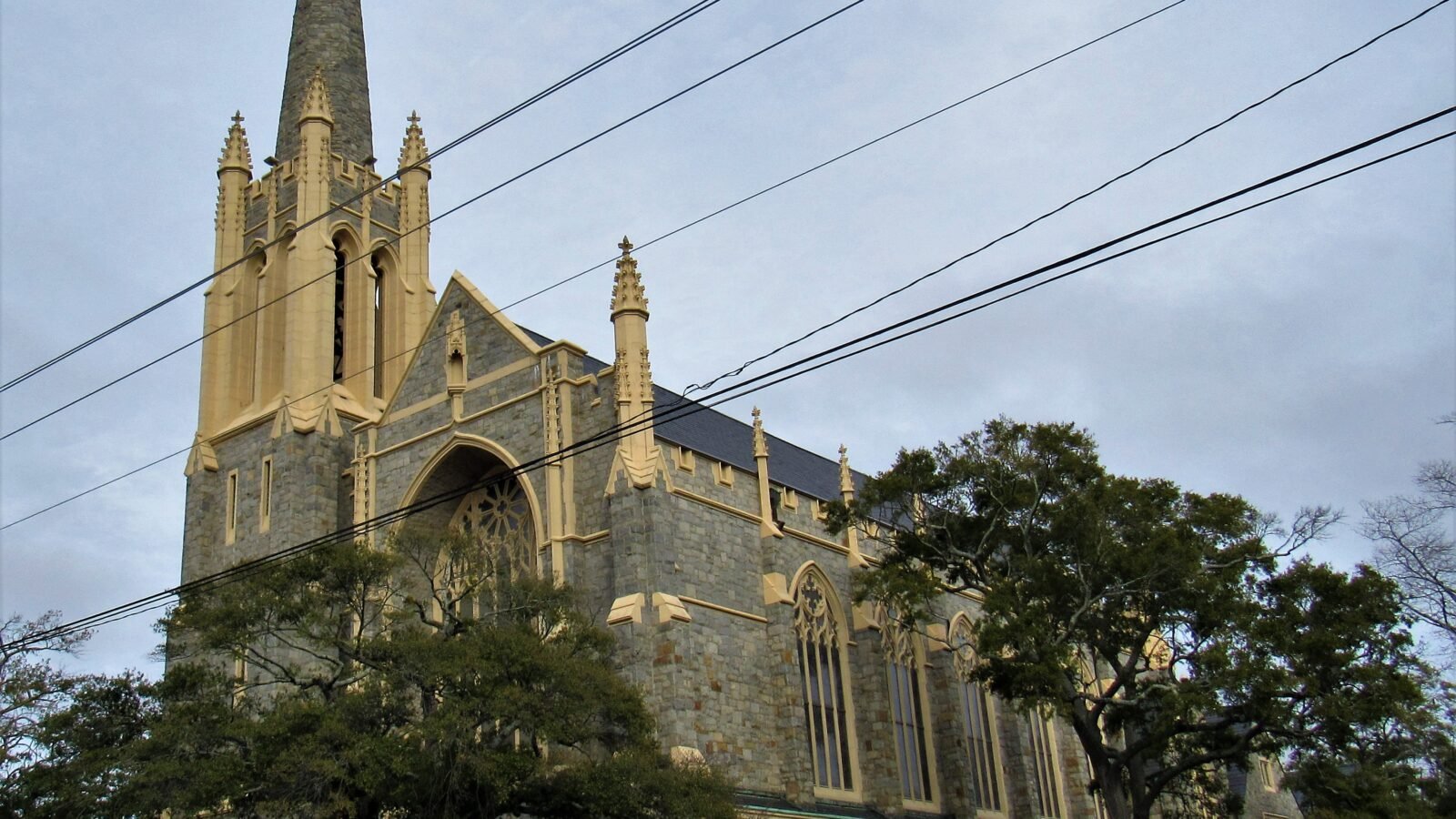
Joseph Ruggles Wilson became pastor of First Presbyterian Church in Wilmington. His work centered on the congregation, and the family's life centered on the manse, the house a church provided for its minister, where books, sermons and argument filled the day.
Janet Woodrow Wilson, the boy's mother, and her husband both valued education and public speaking. Their household was serious and religious, and it expected the children to read and to speak well. Tommy, as the family called him at the time, absorbed the rhythms of sermons and debate that would later mark his writing and speeches.
Biographers have pointed to the father's influence as one of the strongest on the son. The elder Wilson was a Southern Presbyterian who had supported the Confederate cause, and the son's later views on the South and on race were formed in this same household.
Schooling, reading and a slow start
Wilson's schooling in Wilmington was irregular and is thinly documented. He sat in on some classes at Wilmington's Tileston School while living in town.
Reading came slowly to him as a child. Modern historians suggest he may have had dyslexia, but the evidence is mainly from family recollections and later letters. Accounts differ on when he learned to read, saying about age ten in one and about thirteen in another.
Later, at Princeton, he debated in the college's forensics society and edited its newspaper, early signs of the public speaking that would become central to his career as a professor and a politician.
College years and a name change
Earlier, in 1873, Woodrow had entered Davidson College in North Carolina, but illness forced him to leave after one year. In November 1874 the family moved to Wilmington, where Joseph Ruggles Wilson took the pulpit at First Presbyterian Church.
He entered the College of New Jersey, later Princeton University, in 1875. He graduated in 1879, and around this time he began using Woodrow in place of Thomas, the name his family had used for him, Tommy.
Wilmington's most painful later chapter came after the Wilsons had left the city's pulpit. In November 1898, a white supremacist coup overthrew the elected biracial city government and killed Black residents; the death toll is uncertain, with estimates ranging from at least 14 to more than 300. The massacre remains a deep wound in the city's history. Wilson was by then a professor in the North.
His own views on race, shaped by the Southern household of his youth, became one of the most criticized parts of his presidency. After 1913 his administration segregated work spaces in several federal departments, including the Post Office and the Treasury, and historians continue to debate how much his early years in the South explain those decisions.
Citation information
- Article title
- Woodrow Wilson’s Wilmington Years: A Future President’s Student Days on the Cape Fear
- Author
- Melissa Claire
- Website name
- North Carolina Backstory
- URL
- https://northcarolinabackstory.com/woodrow-wilsons-wilmington-years-a-future-presidents-student-days-on-the-cape-fear/
- Original published date
- November 18, 2026
We strive for accuracy and fairness. If you see something that doesn’t look right, contact us.