Ramsour’s Mill, June 1780: The Loyalist Defeat in Lincoln County
In June 1780, Patriot militia and Loyalist farmers who had grown up as neighbors fought near a gristmill in Lincoln County, North Carolina. The battle shaped the backcountry war that followed.
- When
- 1780
- Where
- Lincoln County, North Carolina
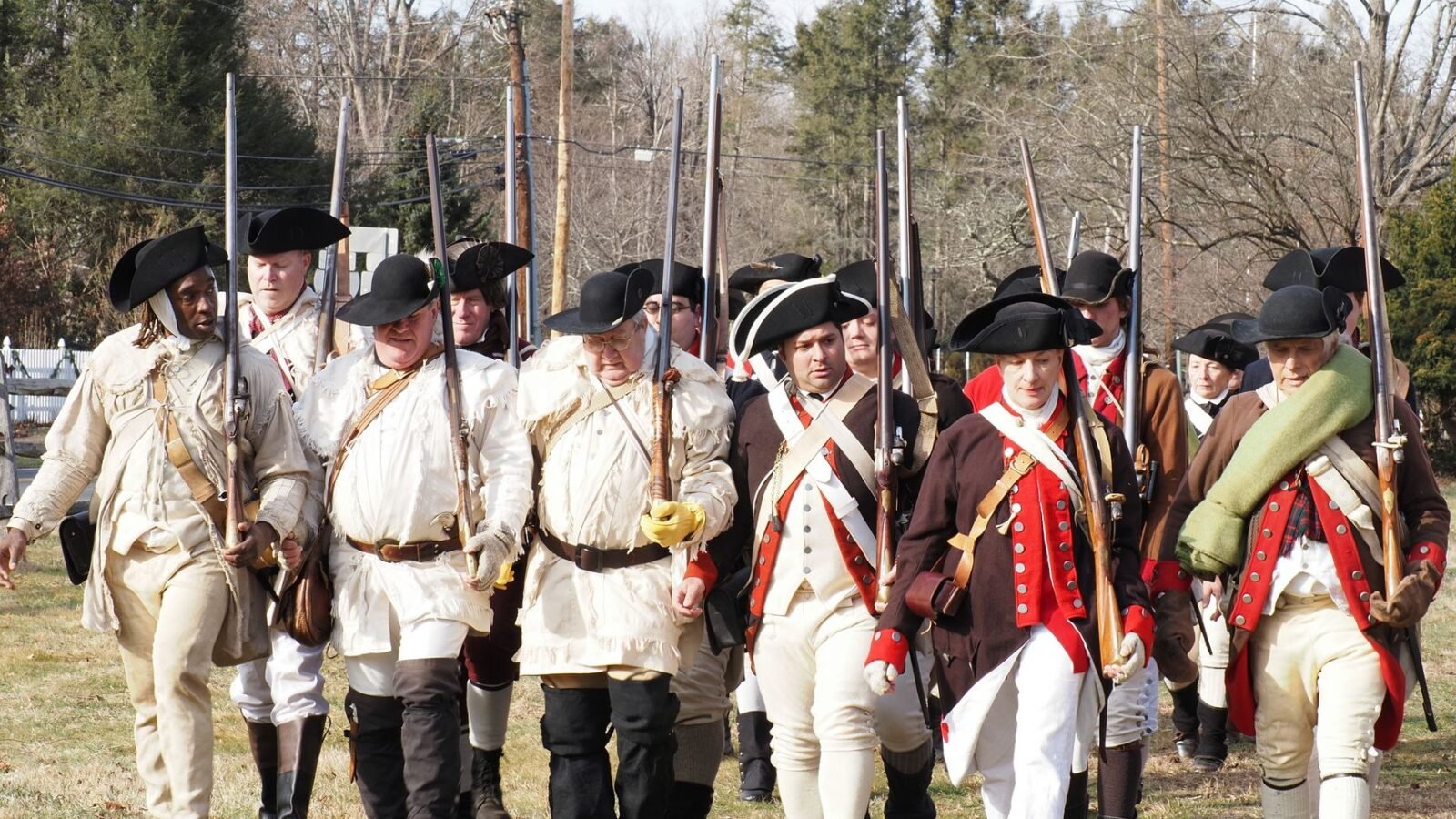
In late June 1780, the hills west of the Catawba River in North Carolina were full of men who knew one another by name. Many had traded at the same mills, attended the same churches and borrowed the same plows. On June 20, they met in arms near a gristmill owned by Jacob Ramseur, and the fight that followed was one of the bloodiest in the Carolina backcountry.
The battle at Ramsour's Mill is often remembered as a small engagement, fought by farmers and local militia rather than regular armies. That description is accurate, but it understates what the fight meant. It showed how far the Revolution in the South had turned into a war between neighbors, and it came just weeks after the British captured Charleston.
A province without an army
The British took Charleston on May 12, 1780, after a siege that ended with the surrender of the Continental army under Benjamin Lincoln and the loss of a large part of the Continental force in the South. With the principal Patriot army in the region gone, British commanders expected that royal government could be restored in the Carolinas more quickly than they had hoped earlier in the war.
The backcountry was the wild card. Lincoln County had been split off from Tryon County only in 1779, and its settlers included Scots-Irish and German families. Many had no strong political loyalty to either side. Others had grievances against eastern planters, and some had reasons to support the Crown. Patriot and Loyalist leaders both began raising men.
Neighbors on opposite sides
In June, a body of Loyalist militia gathered on high ground near Ramsour's Mill, planning to march to join British forces in South Carolina. Estimates of their numbers vary: some sources put the force at roughly 800 to 1,300 men, and about 1,300 is the figure most often given. Under any estimate, the Loyalists greatly outnumbered the Patriots, who numbered about 400.
The Patriot force was assembled under Colonel Francis Locke, a local militia leader, and drew men from the surrounding settlements. It also included officers who would later become known in North Carolina history, such as Joseph Graham, whose later narratives of the battle are still cited. Many of the men on both sides had relatives on the other side, and the local character of the struggle made the fight more personal than a battle between strangers would have been.
The fight at the mill
The Patriots attacked the Loyalist camp on the morning of June 20. The Loyalists were caught before they could organize fully, and the fighting that followed was close and confused, with men firing from cover and then breaking into hand-to-hand combat. Loyalist units held their ground for a time before they were driven back.
Casualty figures differ between sources, and historians have not settled on exact totals. One common estimate puts the dead at 50 to 70 on each side, with about 100 wounded on each side; another puts the total at about 70 killed and 200 wounded. Losses on the two sides were roughly equal, and the defeat discouraged Loyalist mobilization in the area. Some later accounts say Loyalists wore green pine sprigs in their hats and Patriots pieces of paper, but these details come from recollections written long after the battle and are best treated as local tradition rather than established fact.
Why a farm fight mattered
The battle did not decide the war in the South. Charleston had already fallen, and the British army under Charles Cornwallis would soon push into the Carolina interior. Horatio Gates's army was defeated at Camden on August 16, 1780, and in the fall Patrick Ferguson's Loyalist force was destroyed at Kings Mountain on October 7. But Ramsour's Mill showed that Loyalists could not simply assume the backcountry would rise for the Crown.
The fight also set a pattern that marked the rest of the Carolina war. Partisan militia, often led by men who knew the land and the families around them, kept fighting after regular armies had gone. Ramsour's Mill was a reminder that the Revolution in the South was fought in farm fields, around mills and along local roads, where the people who fought were the people who had to live together afterward.
Citation information
- Article title
- Ramsour’s Mill, June 1780: The Loyalist Defeat in Lincoln County
- Author
- Samantha Brown
- Website name
- North Carolina Backstory
- URL
- https://northcarolinabackstory.com/ramsours-mill-june-1780-the-loyalist-defeat-in-lincoln-county/
- Original published date
- November 22, 2026
We strive for accuracy and fairness. If you see something that doesn’t look right, contact us.