The Meherrin on the Chowan: A Nation Pushed Down the River, 1650–1755
Between 1650 and 1755, a Iroquoian-speaking nation watched two colonies draw lines across its homeland, and its people were pushed toward the lower Meherrin and Chowan rivers.
- When
- 1706
- Where
- Hertford County, North Carolina, and the Meherrin River in Virginia
In 1650 a party of English explorers led by Edward Bland moved up the rivers of what is now southern Virginia and northeastern North Carolina. Their account, published in London in 1651, names the peoples they met along the way, and among them were the Meherrin. It is the earliest English record of the nation that survives.
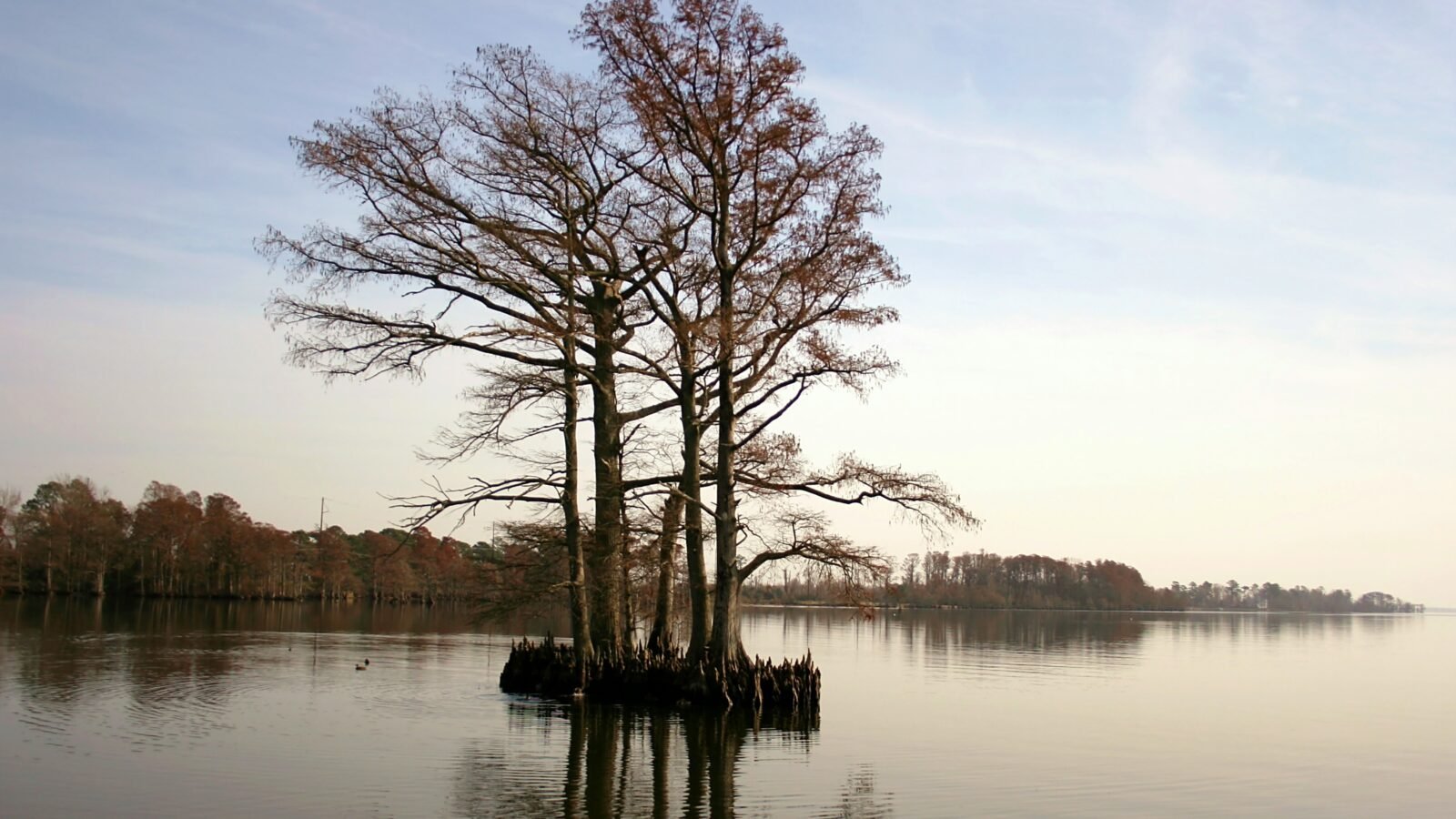
The Meherrin were Iroquoian speakers whose language was closely related to those of the Nottoway and the Tuscarora. Their towns lay along the river that bears their name, a tributary of the Chowan. Over the next century, that homeland would be divided by colonial boundaries that the Meherrin had no part in drawing.
A homeland between two colonies
When English colonists first reached the region, Virginia and the settlements on Albemarle Sound, which later became North Carolina, had not yet agreed on where one ended and the other began. The land of the Meherrin sat in that gap. Their towns lay in a disputed zone that each colony claimed, and the line was not settled until a survey in 1728.
Trade shaped the early relationship. One scholarly account describes the Mangoags, a group that probably included the Meherrin, as having powerful trading connections. Rivalry between Native groups also mattered: a Catawba attack around 1727 killed fourteen Meherrin, according to Byrd's account of the 1728 survey.
Treaties and the slow retreat downriver
In 1705 the Virginia Assembly set aside a reservation for the Meherrin at Maherrin Neck, ground that both Virginia and Carolina claimed. In 1706 Carolina ordered the Meherrin to leave its territory and threatened force, while Virginia's Executive Council insisted that the Meherrin remained under Virginia's protection. The dispute left the Meherrin with less secure ground.
The pressure pushed the nation toward the lower Meherrin River and the Chowan. In August 1707 a Carolina official led about sixty men to attack Meherrin Town, destroying crops and homes, and by 1707 the Meherrin had resettled on land once occupied by the Chowanoke near the mouth of the Meherrin River. Accounts of the dates and terms of these moves differ, and the surviving records do not agree on every detail.
War, reservations and a line on the map
The Tuscarora War, fought in North Carolina from 1711 to 1715, unsettled the whole region. Many Tuscarora left the colony for New York after the fighting. Colonial reports from early 1711 described the Meherrin as becoming increasingly insolent, but the surviving sources do not give a clear account of their part in the war.
In the 1720s, North Carolina set aside a reservation for the Meherrin in the Chowan country. Reservations could be reduced: the Carolina government cut the Meherrin's earlier Virginia reservation at Meherrin Neck in 1726. The boundary between Virginia and North Carolina was surveyed in 1728 by a joint expedition that included William Byrd II, whose account of the work was published later as The History of the Dividing Line. The line split the Meherrin's older homeland between two colonies. After 1728 the North Carolina government dealt with the Meherrin, and Virginia's lieutenant governor acknowledged that the remains of the Meherrin had fallen within North Carolina's limits.
The families who stayed
By the middle of the eighteenth century, the Meherrin were no longer a single large community with its own towns. In 1728 Byrd's party was told that the small remains of the nation had deserted their ancient town near the mouth of the Meherrin River and taken refuge among the English east of the Chowan. By 1761 about twenty Meherrin fighting men and their families lived along the Roanoke River.
The Meherrin's story from 1650 to 1755 is one of a nation that lost its position at the center of its own homeland. The boundaries that colonists drew on paper became the lines that decided where Native families could live, and the people who remained east of the Chowan carried the memory of the older river country with them.
Citation information
- Article title
- The Meherrin on the Chowan: A Nation Pushed Down the River, 1650–1755
- Author
- Samantha Brown
- Website name
- North Carolina Backstory
- URL
- https://northcarolinabackstory.com/the-meherrin-on-the-chowan-a-nation-pushed-down-the-river-1650-1755/
- Original published date
- November 22, 2026
We strive for accuracy and fairness. If you see something that doesn’t look right, contact us.