Donald Ross’s Pinehurst No. 2 and the Making of an American Golf Course
Donald Ross built Pinehurst No. 2 in 1907 for a North Carolina health resort. Ninety-two years later, Payne Stewart won the U.S. Open there.
- When
- 1907
- Where
- Pinehurst, Moore County, NC
On the final day of the 1999 U.S. Open, Payne Stewart faced a 15-foot par putt on the 18th green at Pinehurst No. 2, in the pine country of central North Carolina. The ball fell in, and a course that a Scottish-born professional had laid out more than nine decades earlier reached its most famous moment.
The course was designed as a championship test from the start, but it was also built to give paying guests a reason to stay longer in a resort town founded to sell fresh air and quiet. How it grew from that dual purpose into one of the most respected courses in the United States says a good deal about golf, about the Sandhills, and about the North Carolina tourism economy.
A health resort in the pines
Pinehurst was the idea of James Walker Tufts, a Boston businessman who made his fortune in soda fountain equipment. In 1895 he bought several thousand acres of longleaf pine land in Moore County and started a resort. The sandhills air was believed to be healthful, and the place began as a retreat for people with consumption before Tufts shifted toward recreation.
The sandy, free-draining soil that made farming hard also made the land suitable for golf. Tufts's guests were soon playing on a first course laid out in the late 1890s. Golf gave the resort a second reason to draw visitors, and by 1901 it had become a core part of the business.
Ross arrives and the 1907 design
Donald Ross was born in Dornoch, on the Scottish coast, and later apprenticed under Old Tom Morris at St. Andrews. In 1900 Pinehurst hired him, and he remained there until his death in 1948.
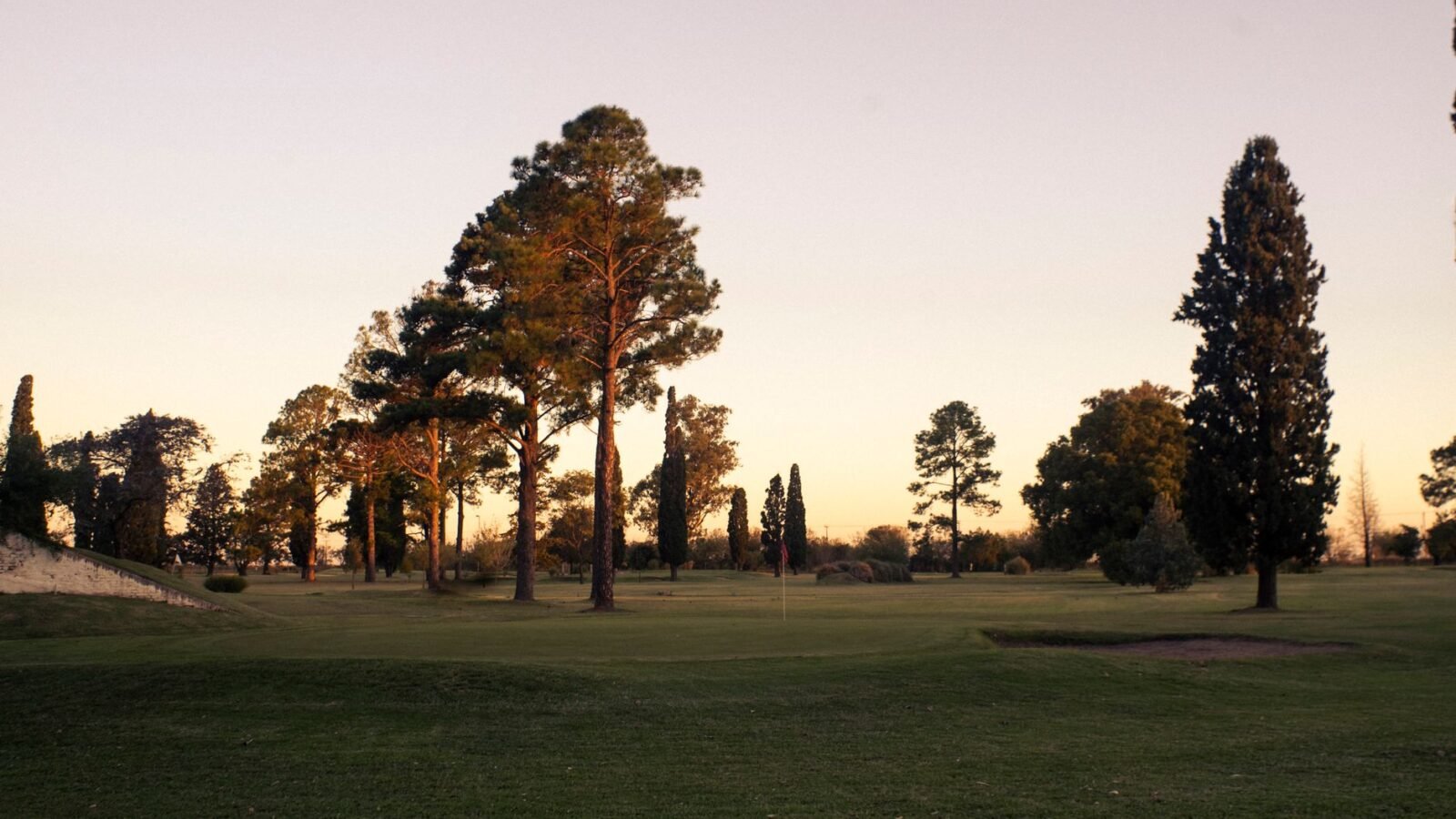
Pinehurst No. 2 opened in 1907, laid out by Ross on land that was mostly sand, pine and wiregrass rather than the lush turf of many northern courses. He used the natural hazards the land offered, leaving waste areas of sand and native grasses between fairways instead of filling them with water or trees. His greens were heavily contoured and crowned, and they rewarded a well-struck approach shot placed on the correct side of the flag.
The result was a course that asked for accuracy and thinking rather than brute length. Ross designed hundreds of courses across the country over his career, and Pinehurst No. 2 is widely regarded as one of his best.
Decades of change
Over the following decades, the course changed as golf changed. Grass was planted on many of the greens and surrounds, and Bermuda grass grew up in the rough, which made the course more lush and, in some eyes, less like the sandy original. Ross died in 1948, and later generations of course managers and architects made their own alterations to the layout.
By the early 2000s, the Bermuda rough and the trimmed surrounds had moved the course away from its sandy character. In 2010 and 2011, the course was restored by the golf architects Bill Coore and Ben Crenshaw, who removed much of the Bermuda rough and returned large areas to wiregrass and sand. The work aimed to recover the feel of Ross's original design, though golfers and critics have debated how closely any restoration can match a course that changed over a century.
From resort course to major venue
Pinehurst No. 2 had already hosted major events, including the 1936 PGA Championship and the 1951 Ryder Cup, before the United States Golf Association chose it for the 1999 U.S. Open. That tournament ran June 17 to 20. Stewart finished at one under par, 279, and beat Phil Mickelson by a single stroke. It was Stewart's second U.S. Open title, following his win at Hazeltine in 1991.
Stewart's victory came in the final months of his life. He died on October 25, 1999, when the Learjet carrying him crashed in South Dakota. The Pinehurst win, with his trademark plus-fours and his putt on 18, became one of the best-known moments in the tournament's history.
The course has hosted the U.S. Open several times since. Michael Campbell won in 2005, Martin Kaymer won in 2014 with a record eight-stroke margin, and Bryson DeChambeau won in 2024.
A resort town and the state's economy
Pinehurst's growth has always depended on visitors. The village grew up around the hotels and golf courses Tufts and his successors built, and the resort became one of the best-known addresses in North Carolina for golf and winter stays.
The major championships added to that role. Pinehurst No. 2 has hosted the U.S. Open in 1999, 2005, 2014 and 2024, and in 2014 it also hosted the U.S. Women's Open, the only time it has held that event. For a town that started out selling pine air to invalids, the golf course became a major way it sold itself to the rest of the country.
Citation information
- Article title
- Donald Ross’s Pinehurst No. 2 and the Making of an American Golf Course
- Author
- Dylan Thomas
- Website name
- North Carolina Backstory
- URL
- https://northcarolinabackstory.com/donald-rosss-pinehurst-no-2-and-the-making-of-an-american-golf-course/
- Original published date
- November 21, 2026
We strive for accuracy and fairness. If you see something that doesn’t look right, contact us.